
Last updated October 16, 2026
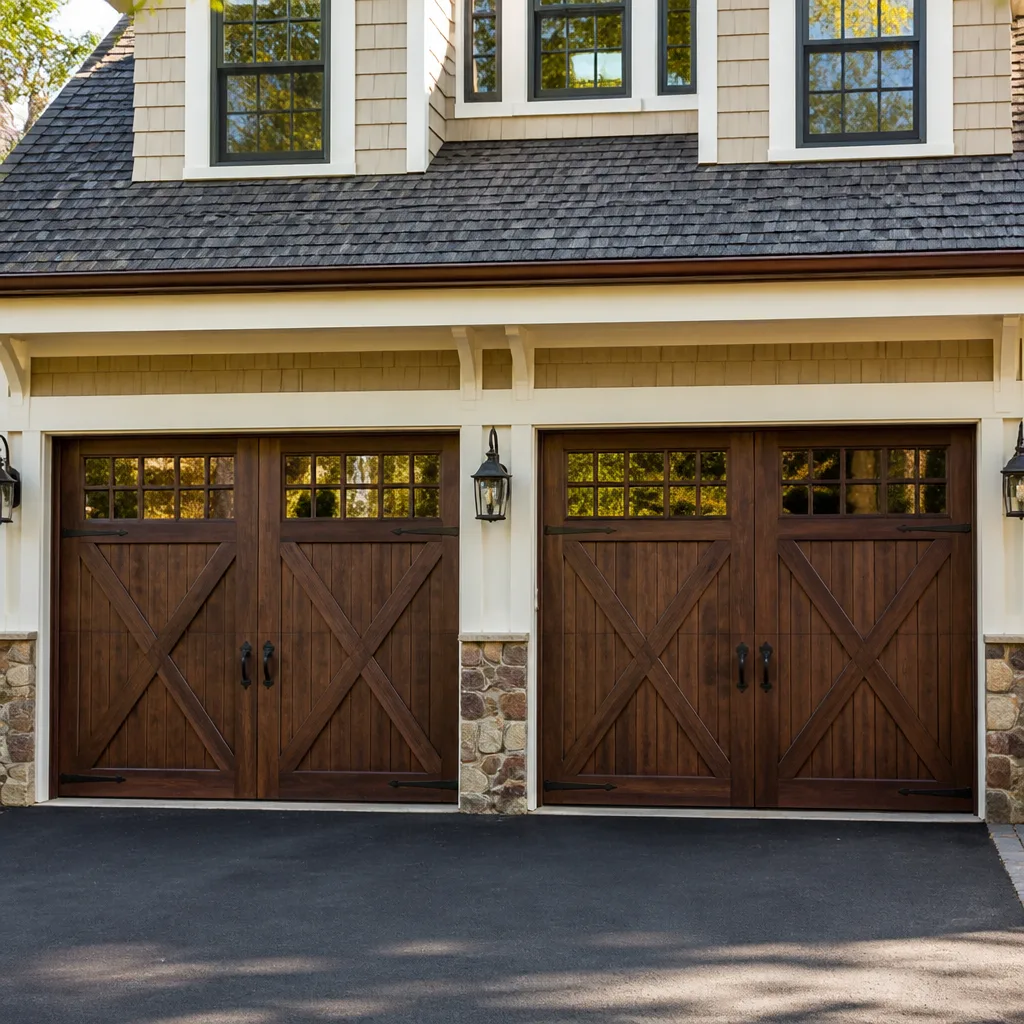 Carriage house
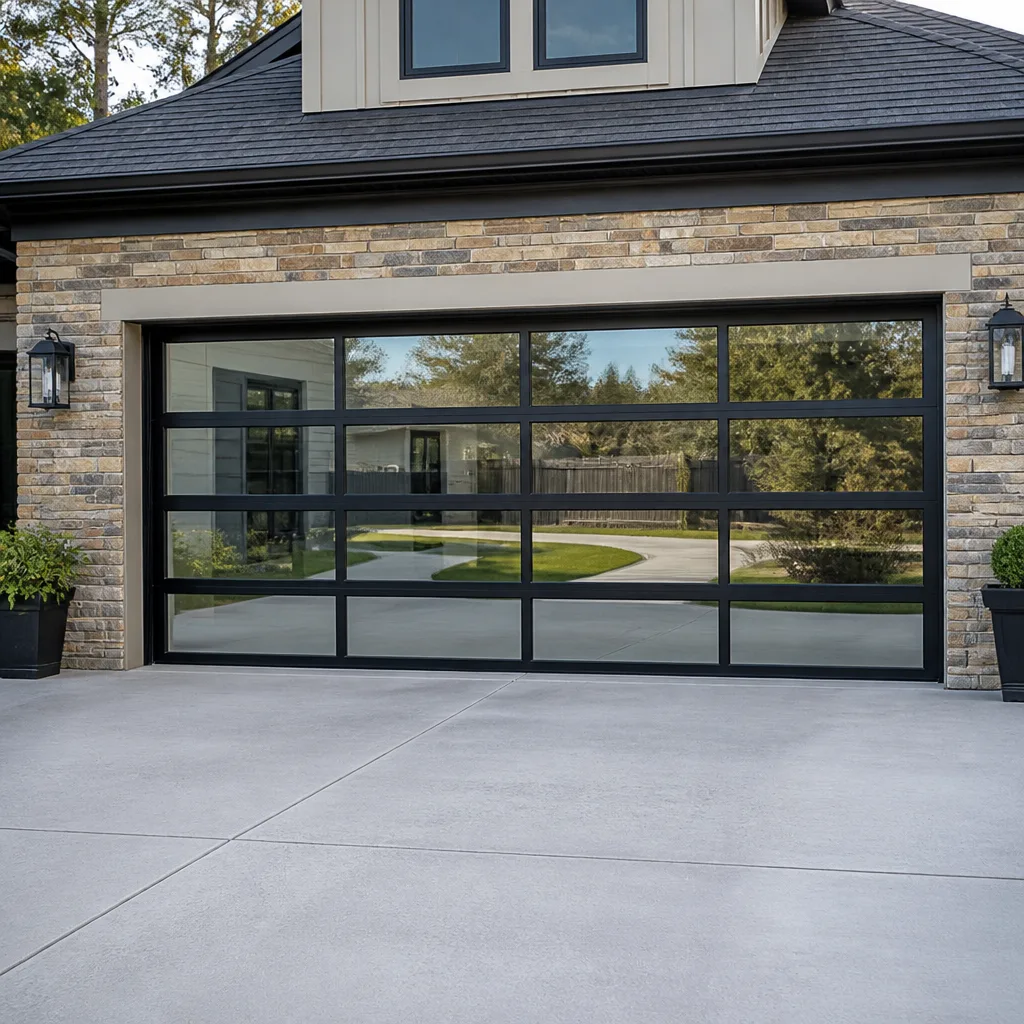 Full-view glass
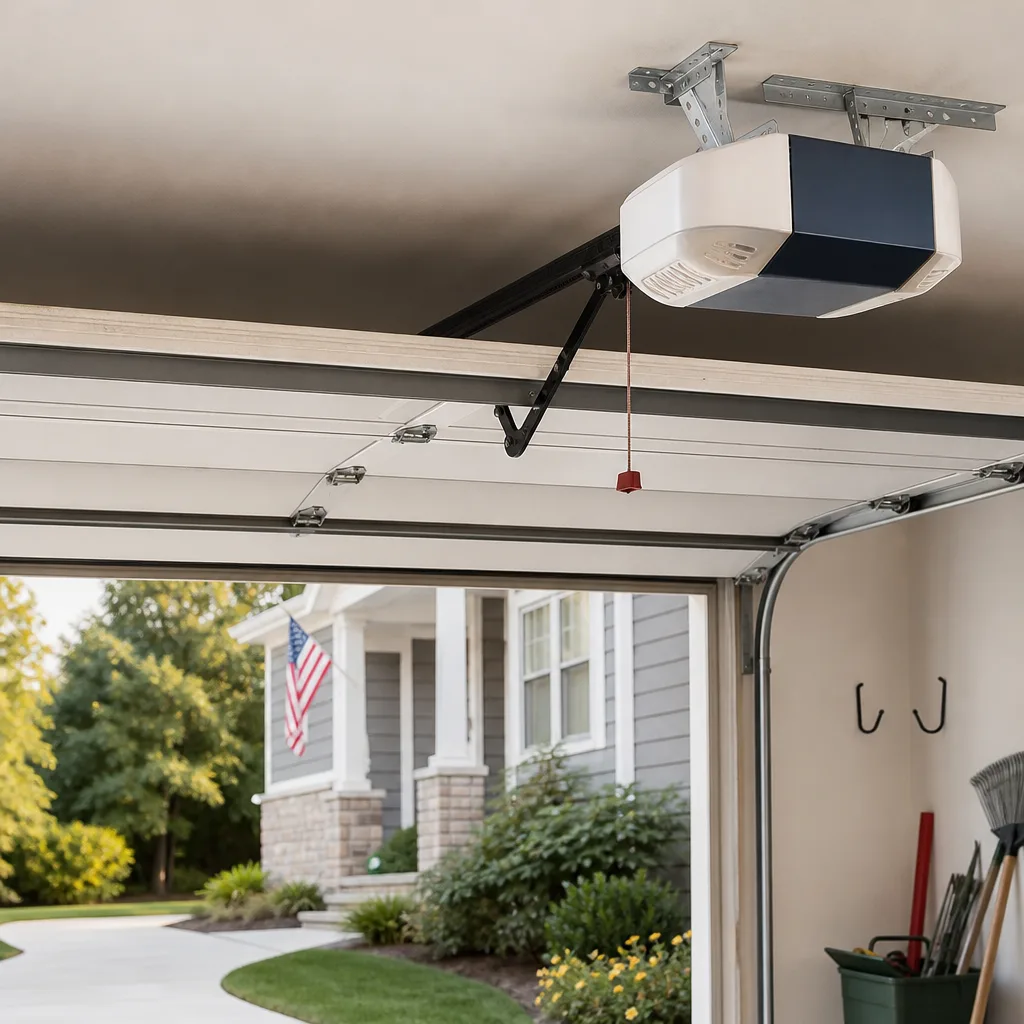 Chamberlain openers
Full 25-point door and opener safety check with every visit - springs, cables, rollers, tracks, and your LiftMaster or Chamberlain opener included
You get a price before we start. It does not change when the truck arrives.
Get your free estimateGarage Door Permits, Codes & Inspections in TX: What You Need to Know
A garage door replacement done without a required permit in Dallas can void a homeowner’s insurance claim if the door is later damaged. Not because the work was bad, but because the paperwork wasn’t filed. Most homeowners never think about permits until a home inspector flags the door during a sale, or an insurance adjuster asks for documentation after a storm. This guide walks through exactly where the permit line sits in Texas, what a Dallas inspection actually checks, and how to avoid the three mistakes that cost homeowners real money at resale and claims time. For related reading, see our Garage Door Warning Signs: A Dallas Homeowner’s Reference Guide.
Quick Answer
In Dallas, a like-for-like garage door replacement using the existing opening and frame typically does not require a building permit. A permit is required when the opening is enlarged, a new header is installed, structural framing changes, or the door is being added where one did not exist before. Fire-rated door requirements between an attached garage and living space still apply even when no permit is triggered.
Styles & brands we work with
Table of Contents
- The Permit Threshold: When Dallas Requires a Permit for Garage Door Work
- How Texas IRC Adoption Affects Dallas Garage Door Codes
- Fire-Rated Doors Between Garage and Living Space
- What a Dallas Garage Door Inspection Actually Checks
- The HOA Layer: Plano, Frisco, and DFW Suburb Approvals
- How Unpermitted Garage Door Work Shows Up at Resale
- Permit Costs and Timeline in Dallas
The Permit Threshold: When Dallas Requires a Permit for Garage Door Work
Here’s the core distinction most homeowners miss: the City of Dallas building permit requirement turns on whether the structure changes, not whether the door itself is new. A new garage door hung in the existing opening, using the current tracks, brackets, and header, is a repair or like-for-like replacement under Dallas building code. No permit. Enlarge the opening by even a few inches, cut into the header beam above the door, or add a garage door where there was previously solid wall, and Dallas requires a building permit before work begins.
This distinction comes from Section 105.1 of the International Residential Code, which Dallas has adopted with local amendments. The IRC requires permits for work that alters structural members, changes the building envelope, or modifies fire-resistance-rated assemblies. A door swap that keeps the opening dimensions and structural framing untouched does not meet that threshold. A door project that changes the rough opening, replaces the header, or adds new framing does.
When No Permit Is Needed
- Replacing an existing sectional door with a new door of the same dimensions in the same opening
- Replacing tracks, rollers, hinges, springs, or cables on an existing door
- Installing a new opener on an existing door
- Swapping a steel panel door for an insulated door of the same size
When a Permit Is Required
- Enlarging or reducing the rough opening dimensions
- Replacing or modifying the header beam above the opening
- Converting a carport to an enclosed garage
- Adding a second garage door where a wall currently stands
- Any work that touches structural framing, foundation anchors, or the load path
In our experience serving Dallas homeowners, the most common permit surprise comes from “just widening the door by a foot” so a truck fits. That’s structural work. It requires engineered drawings or a prescriptive header detail from the code, and it requires a Dallas building inspector to sign off. We’ve seen this exact project done without permits in Lake Highlands and later flagged during a refinance appraisal.
If you’re weighing a like-for-like replacement versus an opening modification, the team at Garage Door Installation in Dallas can tell you which side of the line your project falls on before you spend a dollar.
How Texas IRC Adoption Affects Dallas Garage Door Codes
Texas does not have a single statewide building code. The state operates under a patchwork system where each municipality adopts its own version of the International Residential Code with local amendments. Dallas currently enforces the 2018 IRC with city-specific amendments, while neighboring suburbs like Plano and Frisco may enforce the 2018 or 2021 edition with their own changes. This matters because the code year changes specific requirements like wind-load ratings, insulation values, and safety sensor rules.
For garage doors specifically, the IRC governs three areas that affect a Dallas homeowner even when no permit is pulled:
- Wind load resistance. Dallas sits in a region where the IRC requires garage doors to resist a minimum wind pressure based on exposure category. North Texas storms routinely produce 70 to 90 mph straight-line winds, and a door that fails in a wind event can pressurize the garage and blow out windows or even lift the roof deck.
- Fire separation. The wall and door between an attached garage and living space must meet a minimum 20-minute fire rating. The door itself does not need to be fire-rated if it has a solid core and weatherstripping, per IRC Table R302.6. More on this below.
- Safety reverse systems. The IRC incorporates UL 325 for opener force settings and photoelectric sensors at the door opening.
One Texas-specific wrinkle: the state’s Department of Insurance requires windstorm certification for homes in designated catastrophe areas along the Gulf Coast. Dallas is not in a designated windstorm zone, so homeowners here don’t need a separate WPI-8 certificate. But a Dallas door built to IRC wind load requirements will still hold up better in the spring storm season than a bargain door from a big-box store with no wind rating.
When a Garage Door Repair in Dallas job involves replacing tracks or the door itself, confirming the new components meet the current Dallas-adopted code edition is a good habit. It’s the difference between a door that passes an inspection and one that gets red-tagged.
Fire-Rated Doors Between Garage and Living Space
The IRC requires the wall separating an attached garage from the living space to have a fire-resistance rating of not less than 20 minutes. The door between the garage and the house interior must follow one of three compliance paths: it can be a solid wood door at least 1-3/8 inches thick, a solid or honeycomb-core steel door, or a listed 20-minute fire-rated door. The garage vehicle door itself, the big one, does not need to be fire-rated under the IRC.
What Dallas inspectors look for is the self-closing requirement. The interior door between garage and house must be self-closing, and the hinges must be spring-loaded or the door must have an approved self-closing device. A propped-open door or a missing closer is one of the most common inspection failures we see on Dallas homes.
Section R302.5.1 of the IRC also requires that any ductwork penetrating the garage-to-house wall be at least 26-gauge steel and have no openings in the garage. This is a code detail most homeowners never notice, but a sharp Dallas home inspector will flag it.
The practical takeaway for a Dallas homeowner: if you’re replacing the vehicle door, the fire-separation requirement on the interior door doesn’t change. If you’re doing a larger remodel that touches the wall between garage and living space, that’s when the fire-rating details become part of the permit review and inspection.
What a Dallas Garage Door Inspection Actually Checks
If your project does trigger a permit in Dallas, here’s what the city inspector will actually look at when they come out, and how to prepare using our Garage Door Repair Maintenance Checklist for Dallas Homeowners. Knowing this ahead of time prevents a failed inspection and a re-inspection fee.
- Opening dimensions and header size. The inspector confirms the rough opening matches the approved plans and that the header is sized correctly for the span. An undersized header is an automatic fail and requires correction before the door installation can be signed off.
- Opener power disconnect. The opener must have a manual release that allows emergency operation of the door from inside the garage without a tool. This is a UL 325 requirement referenced by the IRC.
- Auto-reverse force setting. The inspector uses a test block or asks to see the opener’s force setting verified. The door must reverse when it encounters resistance equivalent to a 2×4 laid flat under the closing edge. If the opener crushes the block, the force setting is too high and the inspection fails.
- Photoelectric sensor placement. Sensors must be mounted no higher than 6 inches off the garage floor on the door opening. A sensor mounted higher than 6 inches fails, even if it works correctly.
- Header clearance and track bracing. The inspector checks that the track system is properly braced and that the header brackets are secured to solid framing. Code requires positive attachment to the structure.
- Fire separation intact. If the project touched the garage-to-house wall, the inspector verifies the 20-minute separation is preserved and the interior door is self-closing.
Most Dallas inspections take 15 to 30 minutes. The inspector is verifying code compliance, not the quality of the door installation itself. That’s why the quality guarantees on an installation matter separately from inspection approval.
Our technicians at Bramwell prepare every permitted Dallas installation to pass inspection the first time by checking opener force settings, sensor heights, and header clearances before the inspector arrives. It saves the homeowner a re-inspection fee and a second day off work.
The HOA Layer: Plano, Frisco, and DFW Suburb Approvals
Dallas proper may not require a permit for a like-for-like door swap, but the homeowner’s association in Plano, Frisco, McKinney, Allen, or any of the other planned communities around Dallas might require architectural review approval first. This is a second layer entirely separate from city code, and it catches people off guard every week.
HOAs in master-planned DFW communities typically require written approval for any change to the front elevation of the home, and a garage door is the single largest visual element on most front elevations. The HOA isn’t concerned with wind load or fire rating. They’re concerned with door style, color, window placement, and material consistency with the rest of the street.
What a Typical DFW HOA Requires
- A written application with a rendering or photo of the proposed door
- Door color specified from the HOA’s approved palette
- Door style matching the architectural character of the subdivision (carriage house vs. contemporary flush, etc.)
- No window patterns that differ from the neighborhood standard
- Approval before ordering or installing the door, with a typical 14 to 30 day review window
The penalty for skipping HOA review is not a city fine. It’s a notice to replace the door at your own cost, plus possible fines that accrue monthly until the door conforms. We’ve seen Frisco homeowners forced to remove a brand-new $3,000 door because it had the wrong window pattern. The city wouldn’t have cared. The HOA did.
The sequence matters: HOA approval first, then any needed city permit, then installation. Flipping that order creates rework and wasted money. Our Bramwell Garage Doors Dallas home team has walked Dozens of DFW homeowners through HOA submittals and knows which communities in Plano, Frisco, and McKinney have the most restrictive review standards.
How Unpermitted Garage Door Work Shows Up at Resale
Unpermitted work surfaces in three places during a Dallas-area real estate transaction: the seller’s disclosure, the buyer’s inspection report, and the appraisal. A diligent home inspector will note whether the garage door installation appears recent and will recommend the buyer verify permits with the city. A diligent buyer’s agent will pull the permit history from the Dallas permitting portal or the applicable suburb’s records.
What happens next depends on what the unpermitted work actually was.
- Like-for-like replacement without a permit. If it’s a straight door swap that didn’t require a permit under Dallas code, the inspector may note it, but the buyer has no legitimate claim that the work was illegal. The seller simply explains that no permit was required, and the transaction proceeds.
- Opening modification without a permit. If the opening was enlarged, the header changed, or a door was added without permits, the buyer has a real problem. The unpermitted structural work becomes a negotiation item. The seller may be asked to obtain a retroactive permit, pay for a structural engineer’s evaluation, or reduce the price.
- Opener replaced without a permit. Opener replacement on an existing door generally does not require a permit in Dallas, so this rarely creates a transaction issue.
The insurance angle is the one people remember. If a garage door fails in a storm and the claim involves structural damage, the adjuster may request documentation that the door was installed to code. An unpermitted opening enlargement undermines that claim even if the door itself was fine. The insurance company doesn’t have to prove the unpermitted work caused the damage; the policy language requiring permitted work gives them grounds to deny the claim.
Marcus Ellery, owner at Bramwell Garage Doors Dallas, has worked with Dallas homeowners on exactly this problem on both sides of the transaction. The fix after the fact is more expensive than the permit would have been up front.
Permit Costs and Timeline in Dallas
If your Dallas garage door project does require a permit, expect to pay between $150 and $350 for a residential building permit depending on the project valuation. Dallas calculates residential permit fees on a sliding scale based on declared project value, so a $5,000 garage door opening modification falls at the lower end of that range. A larger project that includes structural changes and electrical work for a new opener circuit trends toward the higher end.
The timeline runs roughly 7 to 14 days for plan review on a simple residential alteration, though complex structural changes may take longer. Inspections are typically scheduled within 24 to 48 hours of the request being logged, and re-inspection fees run about half the original permit fee if the first inspection fails.
Suburban cities around Dallas have their own fee schedules. Plano typically charges slightly less than Dallas for comparable residential work, while Frisco’s fees trend slightly higher. HOA fees, where applicable, run $50 to $150 for architectural review and are separate from city permit fees.
When you work with Bramwell Garage Doors Dallas on a permitted project, we include the permit fees as a line item in the written price before any work begins. No surprises, no door-step price changes. That’s the Kingswell standard our customers have counted on since 2001.
Common Mistakes to Avoid
- Skipping the permit on an opening modification. Enlarging a garage door opening is structural work. Doing it without a permit in Dallas creates a liability that follows the house to the next owner and gives your insurance company an out on future claims.
- Assuming the HOA doesn’t care because the city doesn’t. The city and the HOA regulate different things. A door the city never sees can still get you a compliance letter from your Plano or Frisco HOA if the style doesn’t match the neighborhood standard.
- Ignoring fire separation when changing the door. Replacing the vehicle door doesn’t change the fire-separation requirements on the interior garage-to-house door. If that door isn’t self-closing or isn’t solid, the code violation predates your new door, but an inspector won’t care who created it.
- Buying a cheap door with no wind rating. North Texas wind events are violent and frequent. A door that meets IRC wind-load requirements for the Dallas exposure category costs more for a reason. The storm that tests it will not be gentle.
- Mounting opener sensors above 6 inches. It’s the easiest thing to get wrong and the first thing a Dallas inspector checks. Sensors must be no higher than 6 inches from the garage floor.
- Not saving permit documentation. If your project did require a permit, keep the final inspection approval with your closing documents. A missing permit record creates the same resale problem as a never-pulled permit.
See the difference
 Before
 After
After Before
 After
After Before
 After
AfterWhen to Call a Professional
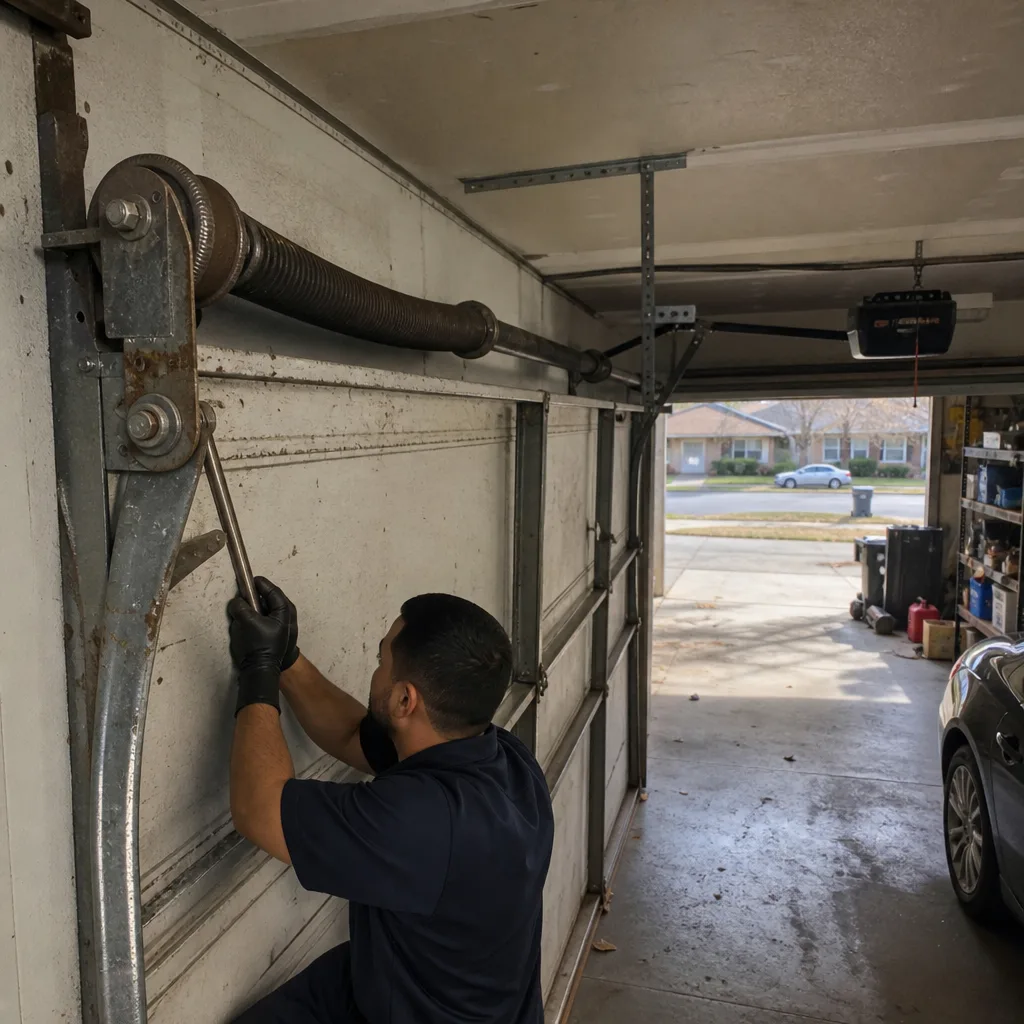
Garage door springs, cables, and opener force settings can cause serious injury when handled by someone without training. A torsion spring under tension stores enough energy to break bone. We recommend calling a licensed professional for any job that involves spring replacement, cable replacement, track adjustment under tension, or opener force calibration. For Dallas homeowners weighing a door replacement that might cross the permit threshold, getting the code question answered correctly before spending money is the smartest first move. Bramwell Garage Doors Dallas offers free estimates in Dallas at Garage Door Spring Repair in Dallas and the surrounding area. Call (361) 240-9428 and a live person answers, 24 hours a day, 7 days a week.
Frequently Asked Questions
No, if you’re replacing an existing door with a new door of the same dimensions in the same opening without modifying the header or framing. A permit is required only when the opening size changes, the header is replaced, or a door is added where one didn’t exist. Call (361) 240-9428 for a free assessment of your specific project.
The work becomes discoverable during a home inspection or insurance claim, and you’ll likely need a retroactive permit, a structural engineer’s review, or both. The unpermitted work can also give your insurer grounds to deny a future claim if the door is damaged. It’s cheaper to confirm the permit question before installation than to fix the paperwork after.
The interior door between an attached garage and living space must be at least 1-3/8 inches thick solid wood, solid or honeycomb-core steel, or a listed 20-minute fire-rated door, and it must be self-closing. The vehicle door itself does not need a fire rating. A Bramwell technician can check your interior door during any service visit in Dallas.
Residential garage door permits in Dallas typically run $150 to $350 depending on the declared project value. HOA architectural review fees, where applicable in Plano, Frisco, and surrounding suburbs, run $50 to $150 separately. The total cost confirms why it’s worth getting a written price before any work starts.
The inspector verifies the header size matches the approved plans, the opener auto-reverse force setting is correct, the photoelectric sensors are mounted within 6 inches of the floor, and the fire separation between garage and house remains intact. Most inspections take 15 to 30 minutes. Preparing for these items ahead of time prevents a failed inspection.
If you live in a planned community in Plano, Frisco, McKinney, Allen, or similar DFW suburbs, most HOAs require architectural review approval before installing a new garage door. The HOA regulates style, color, and materials, separate from any city code requirement. Check your HOA covenants before ordering a door.
The Bottom Line
Garage door permitting in Dallas comes down to one question: did the structure change? Like-for-like replacement in the existing opening means no permit. Opening modification, header replacement, or adding a door means a Dallas building permit and a code inspection. Fire separation requirements apply regardless of permits, HOA review adds a second layer in the suburbs, and unpermitted structural work surfaces at resale and insurance time in ways that cost more than the permit ever would have. When in doubt, confirm before you build. Bramwell Garage Doors Dallas answers the phone 24/7 at (361) 240-9428 and delivers a written price before any work begins, on every job, without exception.
Written by Marcus Ellery, Owner at Bramwell Garage Doors Dallas, serving Dallas since 2001.