
Last updated October 16, 2026
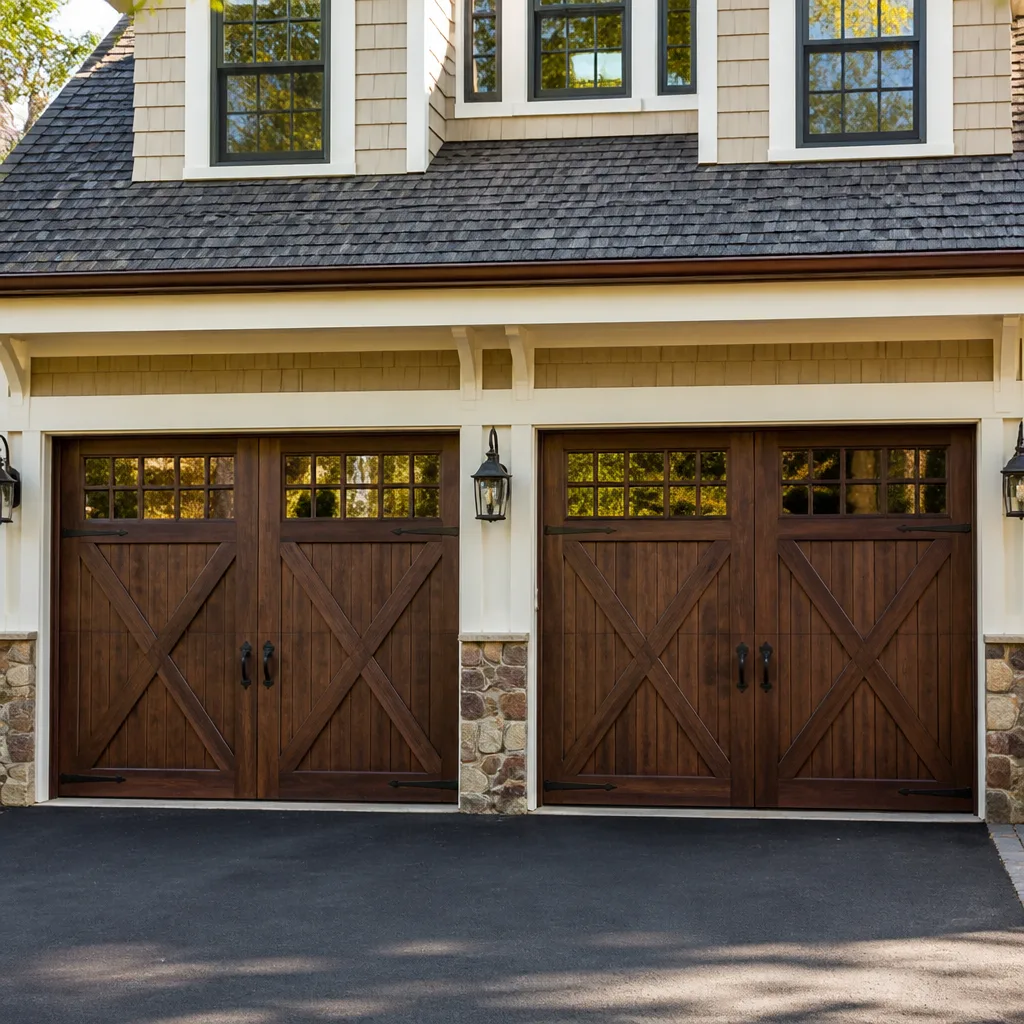 Carriage house
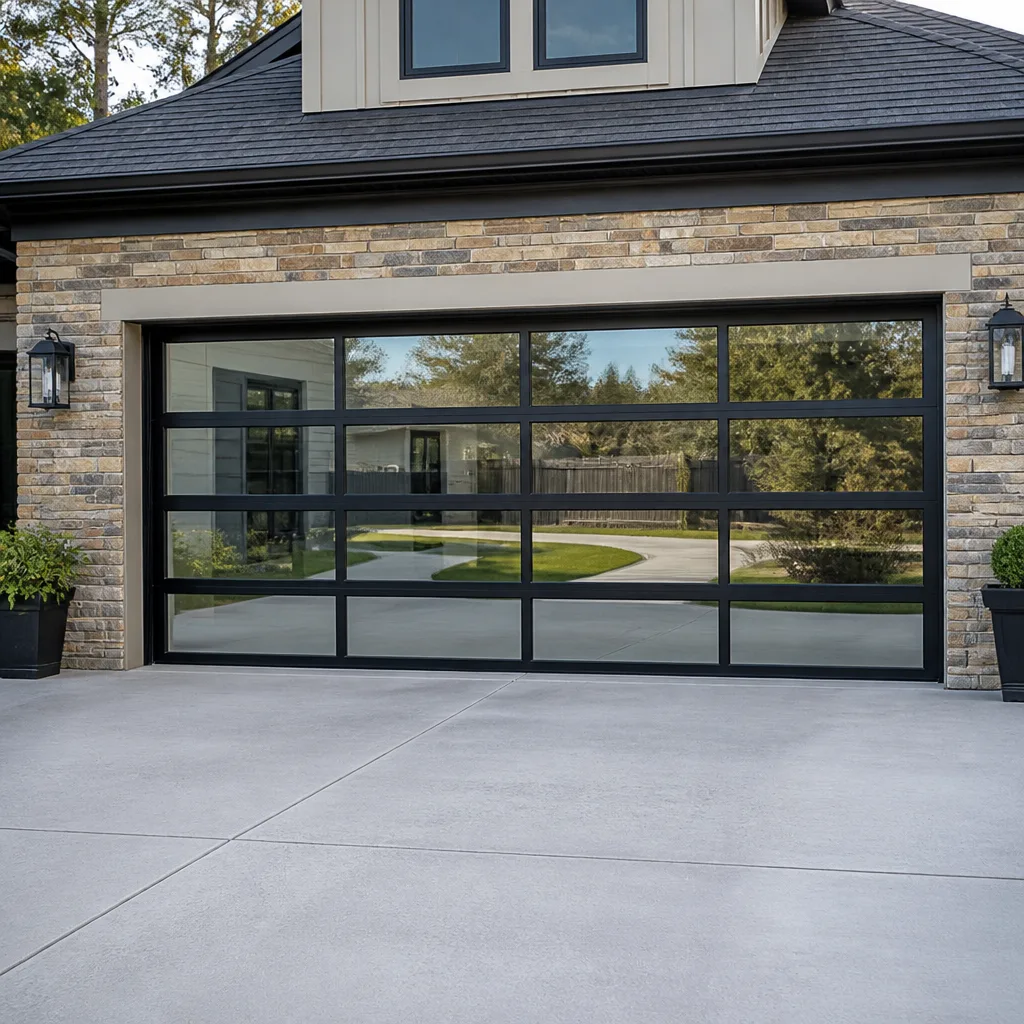 Full-view glass
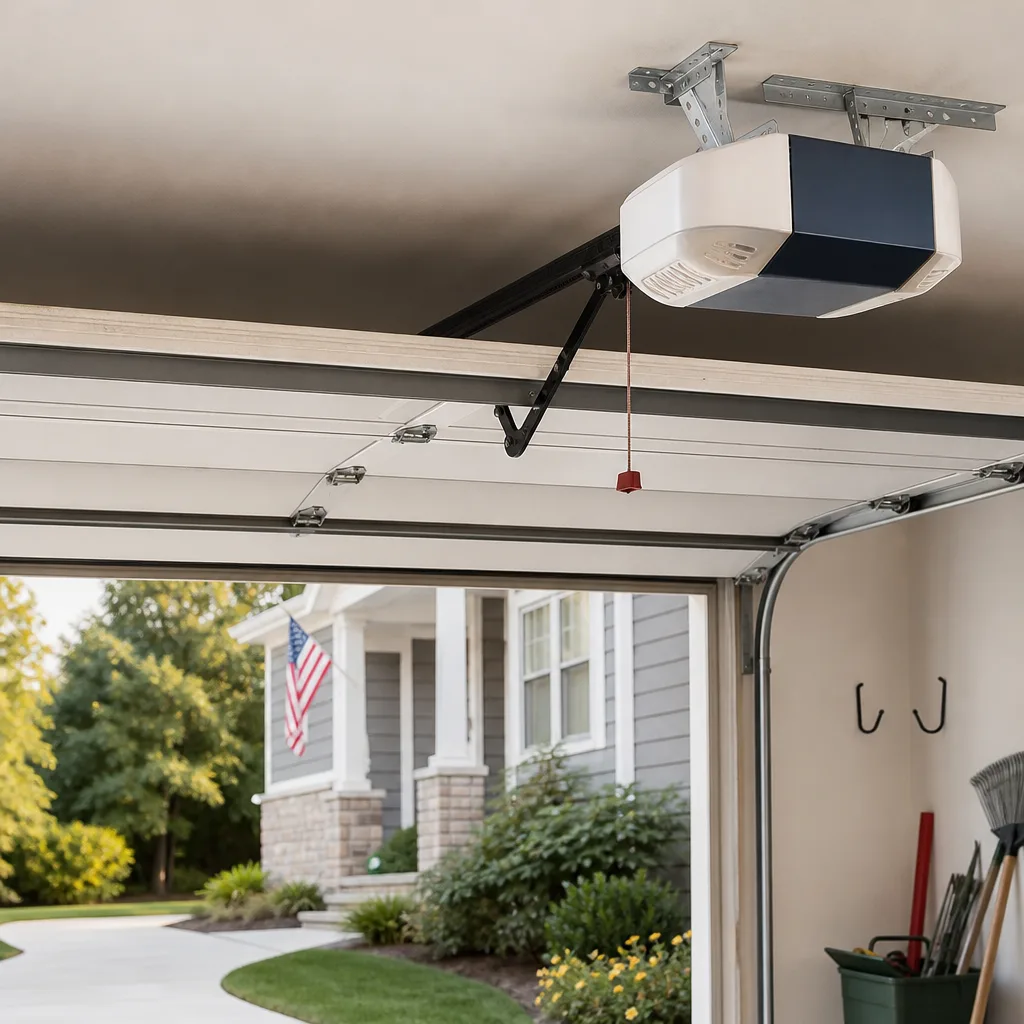 Chamberlain openers
Full 25-point door and opener safety check with every visit - springs, cables, rollers, tracks, and your LiftMaster or Chamberlain opener included
You get a price before we start. It does not change when the truck arrives.
Get your free estimateGarage Door Warning Signs: A Dallas Homeowner’s Reference Guide
Here’s a number that surprises most Dallas homeowners: roughly 70% of the garage door breakdowns we roll out to could have been caught weeks earlier if the homeowner had known what to look at. A garage door that takes three button presses to close isn’t a nuisance. It’s a limit switch telling you the motor’s logic board is reading the door position incorrectly, and when that board fails completely, it usually does so at 7 a.m. with a car stuck inside. Our complete guide to garage doors in Dallas assigns a triage level to each warning sign so you can make an informed call, not a panicked one. By the time you finish reading, you’ll know which signs mean “keep an eye on it,” which mean “book a service call this week,” and which mean “don’t touch that opener again until a pro has looked at it.”
Styles & brands we work with
Quick Answer
Most garage door failures in Dallas give you two to six weeks of warning before they leave you stuck, as we explain in our seasonal garage door care guide. The signs fall into three tiers: monitor it (minor noise, slow response), schedule service this week (visible spring gaps, door reversing mid-travel, uneven movement), and stop using the door now (frayed cables, separated spring coils, door hanging crooked). A spring replacement in Dallas typically runs $150 to $280, while a full opener replacement is usually $350 to $600. Catching tier-two signs early typically keeps the repair under $200; ignoring them for a month often pushes the final bill past $500.
Table of Contents
- Torsion Spring Warning Signs: What to Look for Above Your Head
- Opener Behavior That Signals Trouble: Slow, Grinding, Reversing, and Blinking
- Track and Roller Warning Signs: A 60-Second Visual Inspection
- Why Dallas Foundation Movement Causes Cable and Track Problems
- Cable Warning Signs: Fraying, Slack, and Uneven Winding
- Noise as a Diagnostic Tool: What Your Garage Door Is Telling You
- Common Mistakes to Avoid
- When to Call a Professional
- Frequently Asked Questions
- The Bottom Line
Torsion Spring Warning Signs: What to Look for Above Your Head
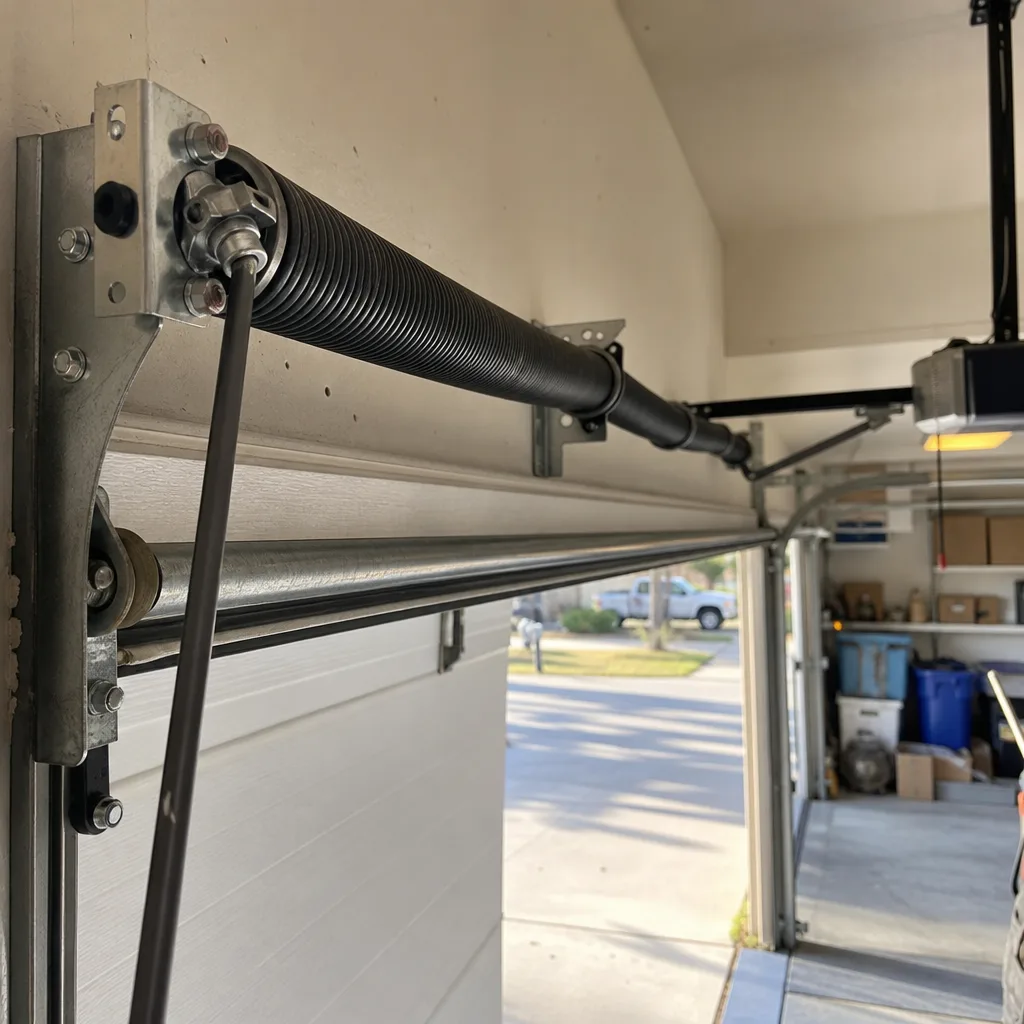
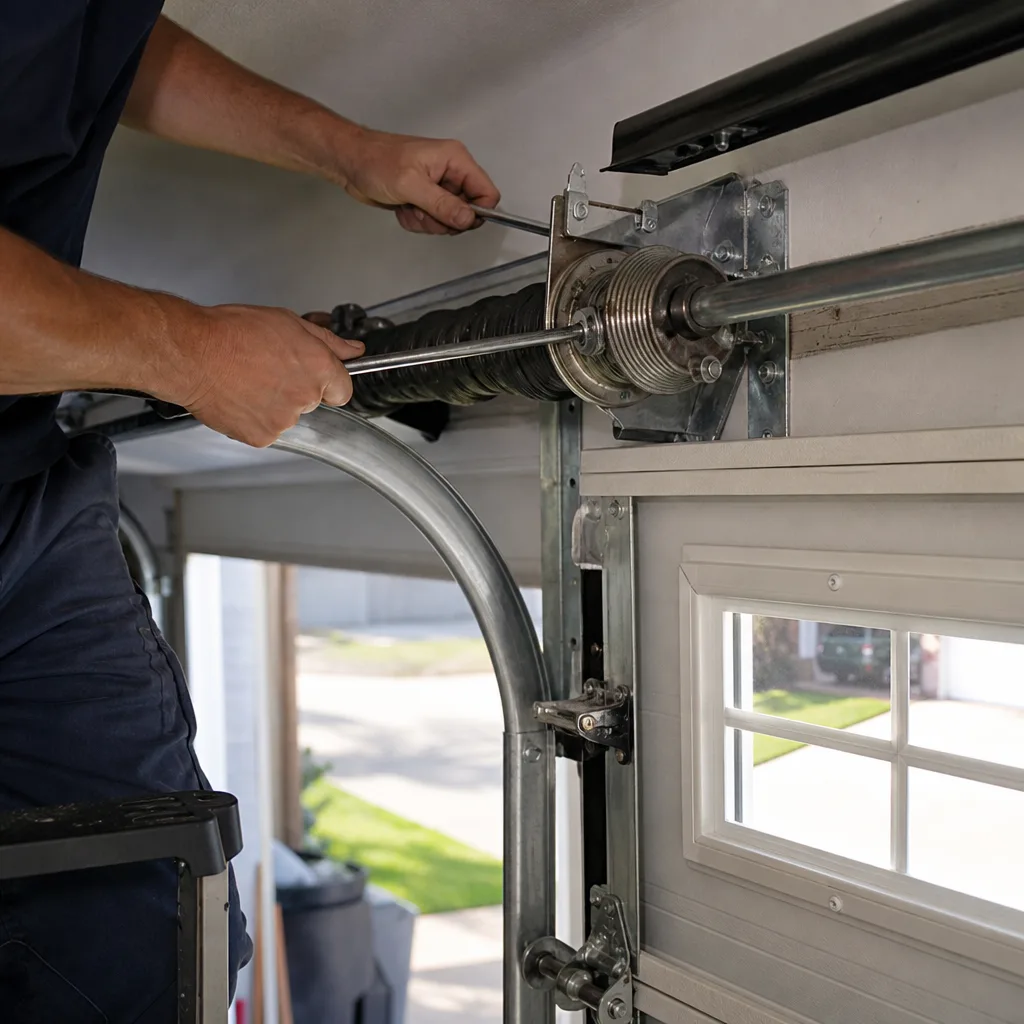
Most garage doors in Dallas use a torsion spring system: one or two heavy coils mounted on a metal shaft above the door opening. The spring, not the opener motor, does the heavy lifting. The motor just guides the door along the track. When a torsion spring fails, the door suddenly weighs anywhere from 150 to 250 pounds, which is why a broken spring leaves the door dead on the floor or slammed against the stops. The good news is that torsion springs give visual and audible warning signs before they break. The bad news is almost nobody looks up.
Here’s what we check during every garage door spring repair in Dallas, and what you can check in under a minute from inside your garage:
Tier One: Monitor It
- Light surface rust on the coils. Rust doesn’t mean the spring is about to snap. Dallas humidity and garage heat cycles cause light oxidation on almost every spring older than three years. Wipe it down, coat it with a light silicone spray, and check again in a month.
- A faint “tick” when the door moves. Sometimes this is just the coils settling on the shaft. If the tick is quiet, consistent, and the door opens smoothly, note it and move on.
Tier Two: Schedule Service This Week
- Gaps in the coil. Look at the spring. A healthy spring is a continuous, tight coil. If you see a visible gap where two coils have separated, the metal has started to deform. This is the equivalent of a stretched rubber band that’s about to lose its snap.
- Rust streaking down the door or wall beneath the spring. This means the corrosion is active and deep. Water has worked into the pores of the metal, and structural fatigue is compounding every time the door cycles.
- An unbalanced door. Pull the release cord while the door is closed, then manually lift the door halfway. It should stay in place. If it drifts down or slams up, the spring isn’t holding tension. This is a spring that’s losing torsional force and will break soon.
Tier Three: Stop Using the Door Now
- Visible separation between coils. If you can see a clear gap wider than the thickness of a quarter between any two coils, the spring is actively failing. Do not open or close the door. Unplug the opener and call a pro.
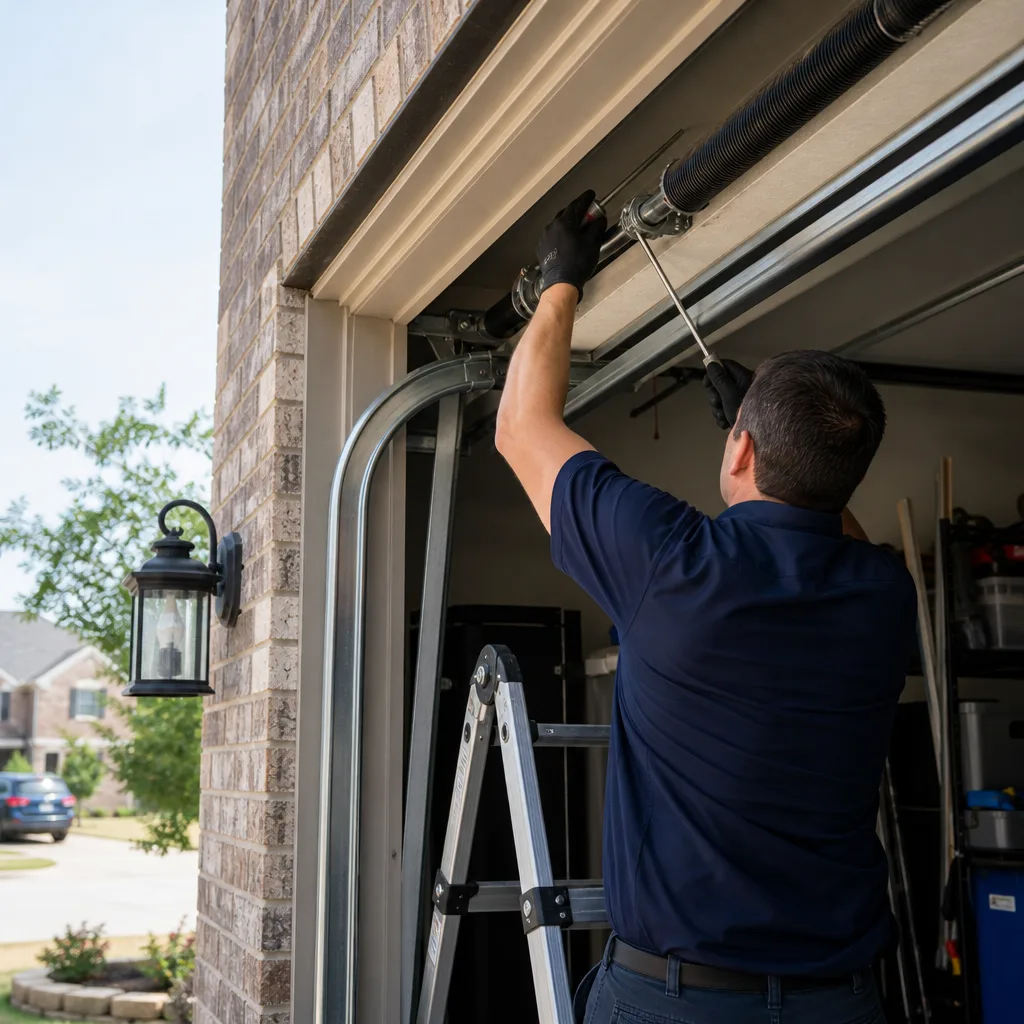
- A broken spring. You’ll usually hear it when it happens: a loud bang from inside the garage that sounds like someone dropped a heavy tool chest. When you look up, you’ll see two separate pieces of the spring where there used to be one. The door will not lift, even with the opener. This is not a DIY fix. Torsion springs store enough energy to break bones.
Spring life in Dallas runs shorter than in cooler climates. Constant heat expansion during our 100-degree afternoons and contraction during the cooler nights puts cyclical stress on the metal. We regularly replace springs in Dallas that are five to seven years old. A spring rated for 10,000 cycles in Minneapolis might last only 7,000 cycles in Dallas because of the thermal load. For most families, that works out to five to eight years of use. If your springs are older than that and showing any tier-two sign, the replacement is not premature; it’s on schedule.
Most torsion-spring replacements in Dallas run $150 to $280, parts and labor included, depending on the wire gauge, spring length, and whether you have one spring or two. We quote a written price before any work starts, so the number you hear on the phone is the number on the invoice.
Opener Behavior That Signals Trouble: Slow, Grinding, Reversing, and Blinking
The opener itself, the boxy motor unit mounted to your garage ceiling, talks to you through behavior and error codes. Most Dallas homeowners ignore the signs until the unit dies completely. By the time an opener fails, you can usually replace the logic board or the whole unit. The trick is reading the signs before the failure strands a car in your driveway.
We service all major opener brands, including LiftMaster, Chamberlain, and Genie, and the diagnostic logic below applies to most belt-drive, chain-drive, and screw-drive units made in the last 20 years.
Warning Sign: The Door Moves Noticeably Slower Than It Used To
A garage door that takes 15 seconds to open when it used to take 10 is telling you something. The most common causes in Dallas garages are:
- Spring fatigue. When the torsion spring loses tension, the opener motor is forced to work harder against the door’s true weight. The motor slows down because it’s overloaded. This is the most common cause of slow movement in Dallas homes with original springs older than six years.
- Worn opener gears. In chain-drive and screw-drive units, the nylon gears inside the motor housing strip over time. The motor spins, but the output shaft turns slowly. When the gear fails completely, you’ll hear the motor running but the door won’t move.
- Track binding. If the rollers are pressing against a bent or misaligned track, the added friction slows the door and strains the motor. This often gets worse as the door approaches the top or bottom of its travel.
If the door is slow, have it checked. Running an opener against a failing spring for weeks is how a $200 spring replacement becomes a $500 spring-plus-opener replacement.
Warning Sign: The Door Reverses Without Touching Anything
Modern openers have two safety systems: the photo-eye sensors near the floor on each side of the door, and the motor’s internal force sensing. If the door reverses mid-travel, one of these is tripping. The specific cause in Dallas is too often misdiagnosed as a sensor problem when it’s actually a spring or track issue.
- Check the photo-eye sensors. They’re the small boxes mounted about six inches off the floor, one on each track. A solid green light on both means alignment is good. A blinking, flickering, or absent light means the beam is interrupted or the wiring is loose. Sunlight can also blind photo-eyes in Dallas, especially on west-facing garage doors in the late afternoon. Shading the sensor with a piece of cardboard can tell you if sun interference is the culprit.
- Check the force setting. If the sensors are aligned and the door still reverses, the opener’s force limiter may be set too low, or the door’s actual weight has increased because a spring is failing. The motor measures resistance as it moves the door. When the resistance spikes, the motor assumes the door hit something and reverses as a safety response. In this case, the reversing is a symptom of spring fatigue, not an opener problem.
- Check for track binding. Run the door manually using the release cord. If you feel resistance at the same point where the door reverses when using the opener, you’ve found a bent track segment or a flat-spotted roller. The motor’s safety system is correctly detecting the obstruction and backing off.
If the door reverses only in the afternoon, it’s probably sun glare on the photo-eye. If it reverses at the same point in the travel regardless of time of day, it’s mechanical resistance. The fix might be a track adjustment, which is a simple, inexpensive repair, or it might be a spring replacement.
Warning Sign: Grinding or “Graunching” During Travel
Grinding metal-on-metal sound during door movement is almost never the motor. It’s the rollers fighting the track, or the chain/screw drive inside the opener running without lubrication. In Dallas, dust from our clay-heavy soil works its way into chain drives and tracks. The grit accelerates wear on nylon rollers and metal hinges.
When we hear “grinding” reported on a service call in Dallas, here’s what we find most often:
- Worn rollers. Nylon rollers have a plastic wheel around the steel bearing. When the plastic wears down, the steel inner bearing rides directly on the track and grinds. This is the classic grinding sound. Roller replacement is typically $10 to $25 per roller and takes about an hour.
- Dry chain or screw drive. Chain-drive openers need regular lubrication. A dry chain sounds rough and “crunchy” during operation. Screw-drive units (common in Chamberlain and older Genie models) sound like a coffee grinder when the screw shaft is dry. Lubrication is a 15-minute job and should be done every 12 months in Dallas because the heat evaporates lubricant faster.
- Loose track fasteners. The lag bolts that hold the vertical track to the wall or the horizontal track to the ceiling can loosen over time. When the door moves, the track wobbles and creates a metal-on-metal rattle or grind.
Warning Sign: Blinking Error Codes on the Opener Unit
LiftMaster, Chamberlain, and Genie openers flash diagnostic codes from an LED on the motor unit. The flashes mean specific failures. Here are the common codes across brands:
- One flash, repeated: The opener’s safety beam is misaligned or blocked. On Chamberlain and LiftMaster units, check that both photo-eyes are lit solid green.
- Four flashes: The opener’s RPM sensor is picking up uneven motor speed. This usually points back to a door that’s binding or a spring that’s failing and making the motor work irregularly.
- Five flashes: The motor control board is detecting a fault. On some Chamberlain units, five flashes indicate overheating, which happens in Dallas garages that reach 110 degrees or hotter. Let the unit cool for 20 minutes and try again. If the code reappears, the board may be near failure.
- Six flashes: The door is moving but the travel limits are not being read. This often means the limit switch inside the motor unit is failing. The opener doesn’t know where the door is in its travel and either runs past the closed position (slam and reverse) or stops short.
When the six-flash limit switch message appears, book the service call. This is the exact “three button presses to close” scenario from the top of this guide. The opener is finished; it just hasn’t stopped working yet. A new board or a new opener is coming, and you’d rather choose the timing than have the opener choose it for you.
Track and Roller Warning Signs: A 60-Second Visual Inspection
You don’t need a ladder or a tool to inspect your tracks and rollers. Stand inside your garage with the door closed and the light on. Look at the vertical track on the left side from floor to ceiling, then the horizontal track that curves toward the motor. Repeat on the right side. Here’s what you’re looking for, in plain language.
Bent Track Flanges
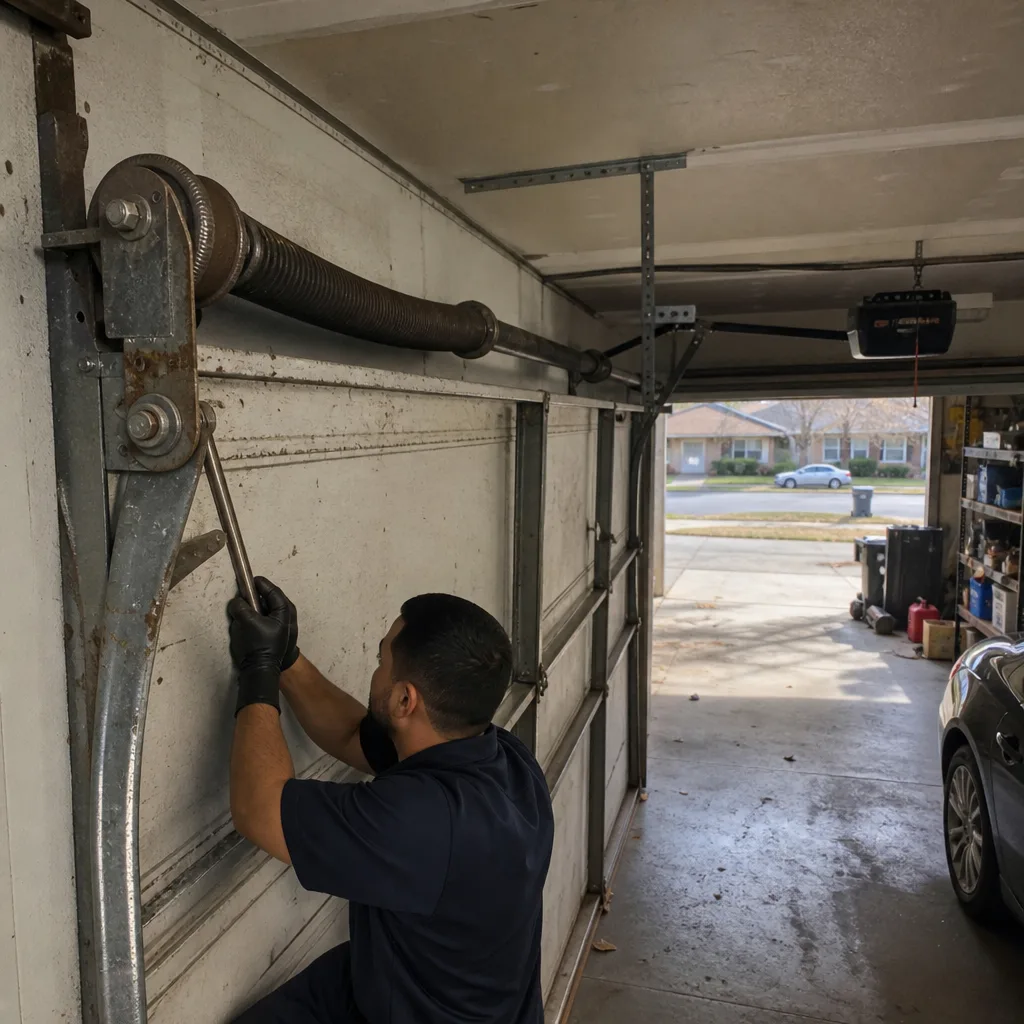
The track is a C-shaped steel channel. The two flat sides are called flanges. When a flange is bent, it usually bends inward, narrowing the channel where the roller stem passes through. A bent flange causes the roller to bind at a specific point in the door’s travel. You may not see the bend from six feet away; get close and sight down the length of the track like you’re looking down the barrel of a pipe. Any deviation from a straight line is a problem. A track with a bent flange can usually be straightened with an adjustable wrench if it’s a minor bend. A heavily kinked track needs replacement. Track replacement in Dallas is typically $150 to $300 depending on whether a single vertical, a horizontal, or both sections are involved.
Flat Spots on Rollers
Rollers are the small wheels that ride inside the track and carry the door’s panels. A healthy roller is perfectly round. A failing roller develops a flat spot where the nylon wheel has worn through or the steel bearing has begun to seize. You’ll hear a flat-spotted roller as a “thump-thump-thump” at regular intervals as the door moves. Identify which roller by running the door slowly and watching each one pass the same point in the track. A flat-spotted roller will wobble or visibly not roll smoothly. Roller replacement takes about 10 minutes per roller and is one of the cheapest garage door repairs in Dallas.
Loose Lag Bolts
The vertical track is anchored to the wood framing of your garage wall with lag bolts: thick screws with a hex head. If the door shakes or rattles during operation, look at the lag bolts. A loose bolt will have a visible gap between the bolt head and the track, or you’ll see the track pulling away from the wall. Tightening a lag bolt is a two-minute fix with a socket wrench, but only if the wood behind it is still sound. In older Dallas homes, the wood around the lag bolts can rot or crack from years of vibration. If the bolt spins without tightening, the wood is stripped, and the track needs to be re-anchored at a new point. That’s a pro job.
Why Dallas Foundation Movement Causes Cable and Track Problems
Dallas sits on expansive clay soil. If you’ve lived here through more than one full summer-to-winter cycle, you’ve watched the ground crack during a dry August and swell after a wet October. That same movement affects your garage door. The foundation of your garage and the slab under the door’s opening move measurably, even in homes with no visible foundation damage. Over time, this movement shifts the plane of the garage floor and the alignment of the wall framing that supports the door’s tracks.
Here’s what that means mechanically. The garage door’s lift cables wind onto drums mounted on the torsion shaft above the door. The cables are what transfer the spring’s lifting force to the bottom corners of the door. For the door to rise evenly, both cables must wind and unwind at exactly the same rate. That only happens when the shaft is level, the drums are aligned, and the door itself is sitting square on the floor.
When your Dallas foundation shifts even half an inch, the opening is no longer square. One side of the door sits slightly higher than the other. That pulls more tension onto one cable. The cable on the high side goes slack or winds unevenly onto its drum. The cable on the low side carries more load than it’s rated for. The result is a door that rises crooked, with one side leading the other by an inch or more. Homeowners describe it as “the door looks drunk.”
The fix for cable-drum misalignment on a Dallas door is usually straightforward: the technician loosens the set screws on the drums, re-levels the shaft, resets the cable tension, and re-tightens. But if the misalignment has been present for months, the uneven wear on the cables, rollers, and even the door panels themselves can turn a $120 adjustment into a $400 repair. This is one reason we tell Dallas homeowners to act on uneven door travel the first week they notice it. The foundational movement isn’t going to stop, which means the misalignment won’t self-correct. It only compounds.
This is also why we recommend that homeowners in Dallas neighborhoods built on highly expansive clay, places like Garland, Mesquite, and parts of Oak Cliff, have their door’s balance checked every two years. It’s a 20-minute service that catches small alignment drift before it becomes a larger mechanical failure.
Cable Warning Signs: Fraying, Slack, and Uneven Winding
The lift cables on a residential garage door are made of twisted steel strands, usually 1/8-inch or 3/32-inch diameter. They’re incredibly strong in tension, which is what they’re designed for, but they’re vulnerable to two things: abrasion and shock loading. Both happen routinely in Dallas garages.
Here’s what to look for on your cables:
- Fraying. Look at the cable where it leaves the drum and travels down to the bottom bracket. If individual steel strands are poking out from the main cable body, the cable is compromised. Fraying happens when the cable rubs against a rough edge on the drum or a misaligned track. It can also happen when a worn roller allows the door to shift sideways, pressing the cable against a track bracket.
- Slack. When the door is fully open, both cables should be taut. If one cable has visible slack, the drum has unwound unevenly or the spring tension on that side has changed. A slack cable can jump off the drum entirely on the next cycle. If that happens while the spring is under load, the sudden release of stored energy is the most dangerous event that can occur on a garage door system.
- Rust or corrosion at the bottom bracket. The bottom bracket is the anchor point where the cable attaches to the door’s bottom panel. Water from rain, snow, or wash-down sprays collects there. Rust at the bracket weakens the crimp and can lead to cable pullout. In Dallas, we see this most often on doors that face north or east and catch the brunt of spring storms.
Here is the safety rule we cannot state strongly enough: do not attempt to replace or re-seat a garage door cable yourself. The cables work in concert with the torsion spring, and the spring is under constant torsional load. When a cable slips off a drum while the spring is wound, the release can break fingers, hands, or arms. Garage door cable work is a professional job, full stop. If you see a frayed cable or a slack cable on your Dallas door, move any cars out of the garage if the door will still open, unplug the opener from the ceiling outlet, and call a technician.
Cable replacement is usually part of a garage door repair in Dallas rather than a standalone service, because a failed cable almost always indicates a secondary problem: a failing spring, a bent track, or a misaligned drum. Replacing the cable without addressing the root cause just schedules the next failure.
Noise as a Diagnostic Tool: What Your Garage Door Is Telling You
Every garage door makes some noise. The question is what kind of noise and when. Trained ears can usually identify the problem from the sound alone, and you can learn to read the basics in a few minutes. Here’s the vocabulary of garage door sounds, in plain Dallas terms.
Squeaking or Squealing
High-pitched, sustained squeaking that corresponds with door movement is often dry metal-on-metal contact. The usual culprits are the torsion spring (which rubs against its own coils as it rotates), the hinges between door panels, or the roller stems. In Dallas, the dry heat evaporates factory lubricant within a season. A silicone-based lubricant applied to the spring coils, hinge pins, and roller bearings once or twice a year will reduce the noise and extend the life of the moving parts. Do not use WD-40 on garage door components; it’s a solvent, not a lasting lubricant.
A Single Loud Bang From Inside the Garage
This is the signal of a torsion spring breaking. The sound is unmistakable: a sharp crack or pop, like a rifle shot muffled by the garage door. It’s the stored energy of the wound spring releasing suddenly. After the bang, the door will not open, even with the opener. If you hear this sound, the situation is already resolved: the spring needs replacement, and there’s nothing more to diagnose. What you should not do is keep pressing the opener button. The motor is trying to lift a door that now weighs its full 200 pounds, and you can burn out the motor in under a minute.
Hissing or Continuous Rustling
A soft hissing from the motor unit during operation is often the internal drive gears spinning against a stripped tooth. In screw-drive and chain-drive openers, the nylon gear wears to the point where the motor spins but doesn’t fully engage the drive. The hissing is the sound of the spinning gear grinding against nothing. This is a repaired-only-by-replacement situation, and a $120 gear replacement is the typical fix, which is far cheaper than the $350 to $600 full opener replacement you’ll face if the gear fails completely and takes the motor shaft with it.
Intermittent Clicking Without Door Movement
A click from the opener that doesn’t turn into movement is usually the start capacitor or the relay on the logic board. In older openers, the start capacitor gives the motor its initial jolt. When it fails, you hear a click as the relay closes, but the motor never starts. Dallas heat kills capacitors faster than in cooler climates. A $40 capacitor replacement versus a $400 opener replacement is one of the best returns on a service call a homeowner can get.
Common Mistakes to Avoid
- Lubricating a failing spring hoping it’ll “get better.” Lubrication quiets a healthy spring; it doesn’t restore tension to a fatigued one. If the spring has visible gaps or the door won’t balance, lubricating just hides the sound while the spring continues to fail. The spring still breaks, but now you won’t hear it coming.
- Fixing a bent track with a hammer. A bent track flange can sometimes be straightened, but hammering on the track while it’s under load risks knocking the rollers out of the channel entirely. The door can then come off its tracks, which is a dangerous and expensive situation. If the track needs work, let a technician with the right tools handle it.
- Continuing to use a door with one broken spring. Some Dallas doors have two torsion springs mounted side by side. When one breaks, the other may still have enough residual tension to lift the door, but the surviving spring is now carrying double its rated load. It will fail soon, and it may fail while the door is mid-cycle. When one spring goes, replace them both. It’s cheaper than two separate service calls.
- Ignoring a door that’s slightly crooked because “it still works.” A door that lifts one corner first or sits visibly uneven is a door with a mechanical problem. In Dallas, that problem is often foundation-related cable-drum misalignment. The longer the door runs uneven, the more uneven wear accumulates on the rollers, hinges, and panels. What was a $120 adjustment becomes a $500 repair.
- Running the opener after a spring breaks. This is the most expensive mistake on this list. A door with a broken spring weighs 150 to 250 pounds, and no residential opener is built to move that weight for more than a few seconds. Every button press after the spring snaps is another step toward burning out the opener motor. The spring was a $200 repair; the opener is another $400.
- Assuming LED error codes are random glitches. The blinking light on your LiftMaster, Chamberlain, or Genie unit is a diagnostic code, not a glitch. Ignoring a four-flash or six-flash code for weeks while the door continues to operate is how a $50 limit switch or sensor alignment becomes a $350 control board replacement.
When to Call a Professional
Any of the tier-three signs from this guide, broken spring, frayed cable, door off its tracks, door that won’t stay up, or a cable that has slipped off the drum, warrants an immediate call. Do not use the door. Unplug the opener and keep hands and tools away from the spring and cable system. These components are under enough tension to cause serious injury.
For tier-two signs, the ones where the door still works but the behavior is changing, the right move is to schedule a service visit before the failure happens; see how to hire a garage door contractor in Dallas: a step-by-step guide for what to ask. A door that’s reversing mid-travel, a visible gap in the spring coils, a door that lifts unevenly, or a code on the opener that hasn’t cleared; these are all repairable at a lower cost if caught early. Bramwell Garage Doors Dallas offers free estimates in Dallas, and the written price we give you before any work starts is the price you pay. Call (361) 240-9428 to book a service window.
This is also the right time to mention what Bramwell Garage Doors Dallas home service looks like if you’ve never worked with us. Our technicians are background-checked and arrive in uniform within a stated arrival window. They inspect the door, tell you what they found in plain language, and hand you a written price before any work begins. Every repair comes with the 365-Day Done Right Promise: if it fails within the guarantee period, we come back and fix it at no charge. That commitment is in writing, on every job, without exception.
Frequently Asked Questions
Most torsion-spring replacements in Dallas run $150 to $280, parts and labor included, with the final price depending on the spring’s wire gauge, length, and whether you have a single or dual-spring system. The written price is confirmed before any work begins, so there’s no door-step surprise. Call (361) 240-9428 for an exact quote.
A door that reverses before touching the floor is triggering the opener’s safety system, usually because the photo-eye sensors are misaligned, blocked, or blinded by direct sun, or because the motor’s force sensor is detecting excess resistance from a failing spring or binding track. Check the photo-eyes first; if both show solid green and the door still reverses, the problem is mechanical and needs a technician’s diagnosis.
No. Torsion springs store enough mechanical energy to shatter bone, and the winding and unwinding procedure requires specialized bars and training. The same goes for lift cables, which are under tension from the spring system. These are the two components where DIY attempts cause the most injuries, and we recommend every homeowner in Dallas leave this work to a professional.
In Dallas, most torsion springs last five to eight years, depending on how often the door cycles and whether the springs were sized correctly at installation. The heat and humidity of our climate accelerates metal fatigue compared to cooler regions. If your springs are older than five years, an annual balance check is a smart preventive step.
A door that rises with one side leading the other usually indicates cable-drum misalignment, which in Dallas is often caused by foundation movement on our expansive clay soil. The movement shifts the door opening slightly out of square, pulling more tension onto one cable. This is a repairable condition, but the longer it runs, the more wear accumulates on the rollers, hinges, and panels.
Yes. Garage door installation in Dallas is a core part of what we do, from single-bay replacements to full two-door installations, with a written price and a scheduled arrival window before any work begins. We work with major brands including Clopay and Amarr, and every install carries the same 365-Day Done Right Promise as our repairs.
The Bottom Line
Garage doors in Dallas fail on a schedule, not by surprise. The spring fatigues a little more every heat cycle. The cable frays one strand at a time. The roller develops a flat spot over hundreds of openings. Each of those changes gives off a signal: a gap in the coil, a dry grind, a door that reverses, a door that sits crooked. Learn to read those signals, and you’ll replace a $200 spring on your schedule instead of a $500 spring-and-opener combination at the worst possible moment. For more guides & resources, visit our blog. The door tells you what it needs. The only question is whether you’re listening.
Written by Marcus Ellery, Owner at Bramwell Garage Doors Dallas, serving Dallas since 2001.
See the difference
 Before
 After
After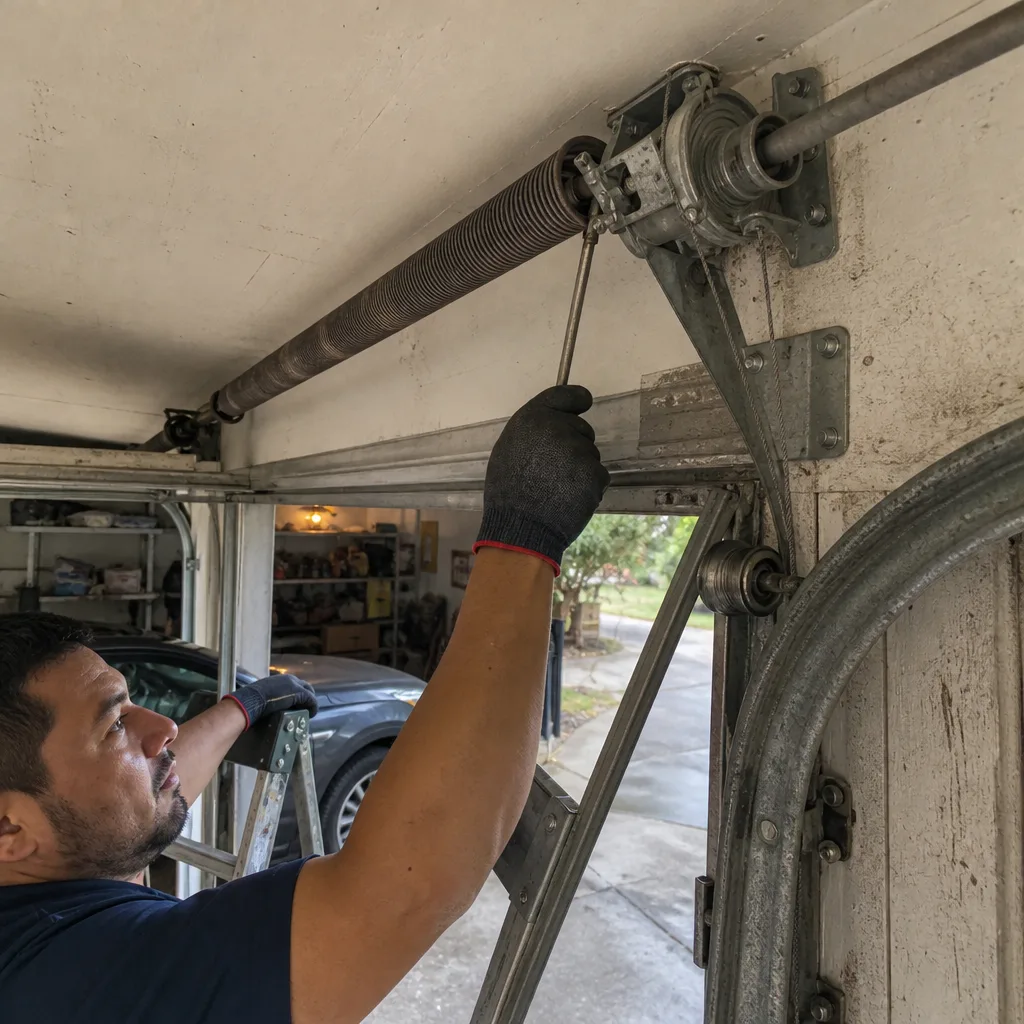 Before
 After
After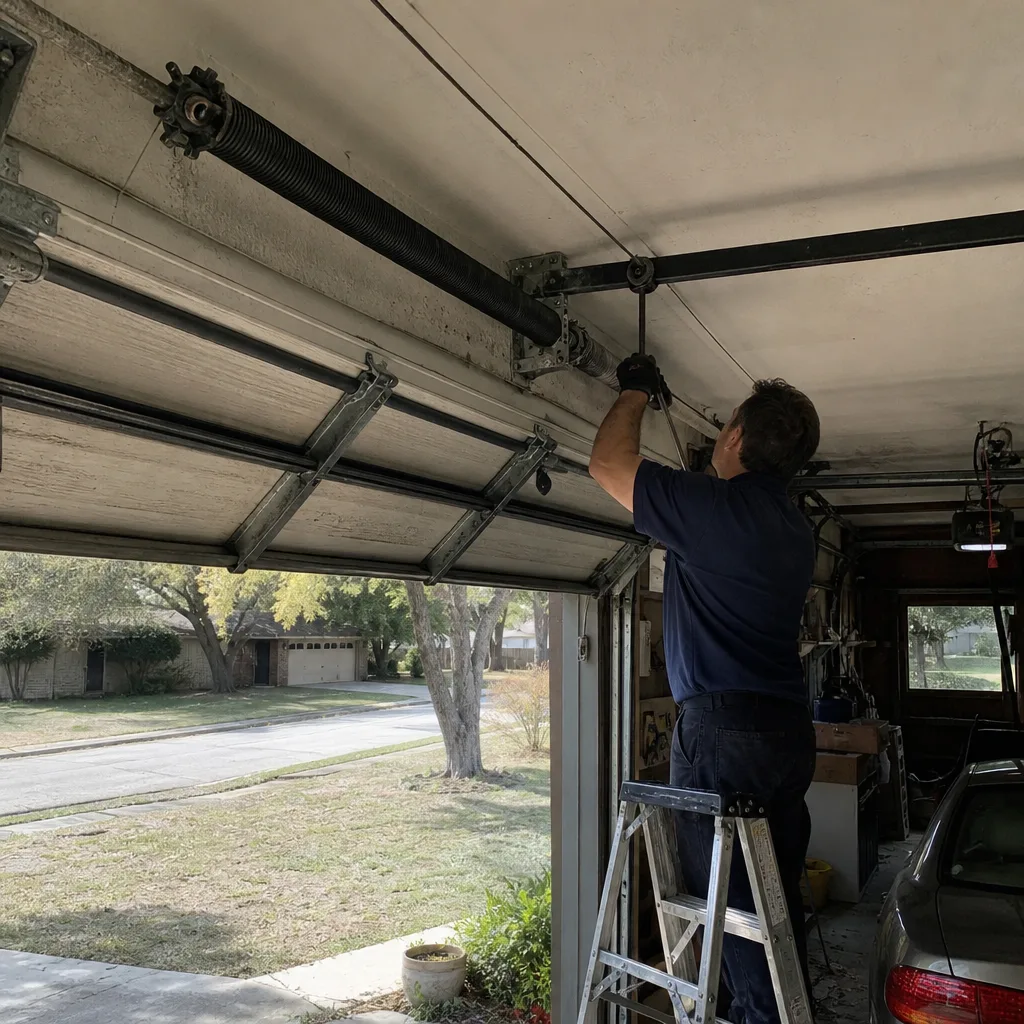 Before
 After
After