
Last updated October 16, 2026
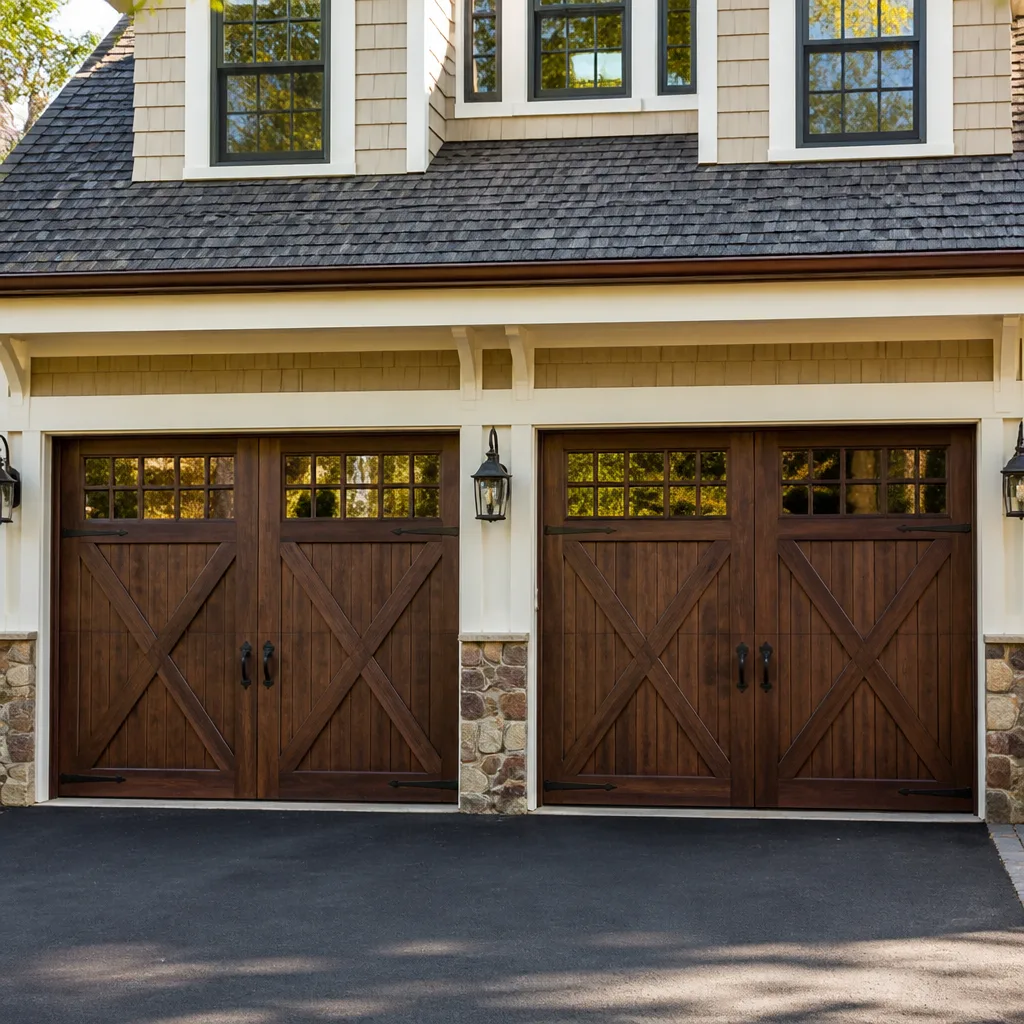 Carriage house
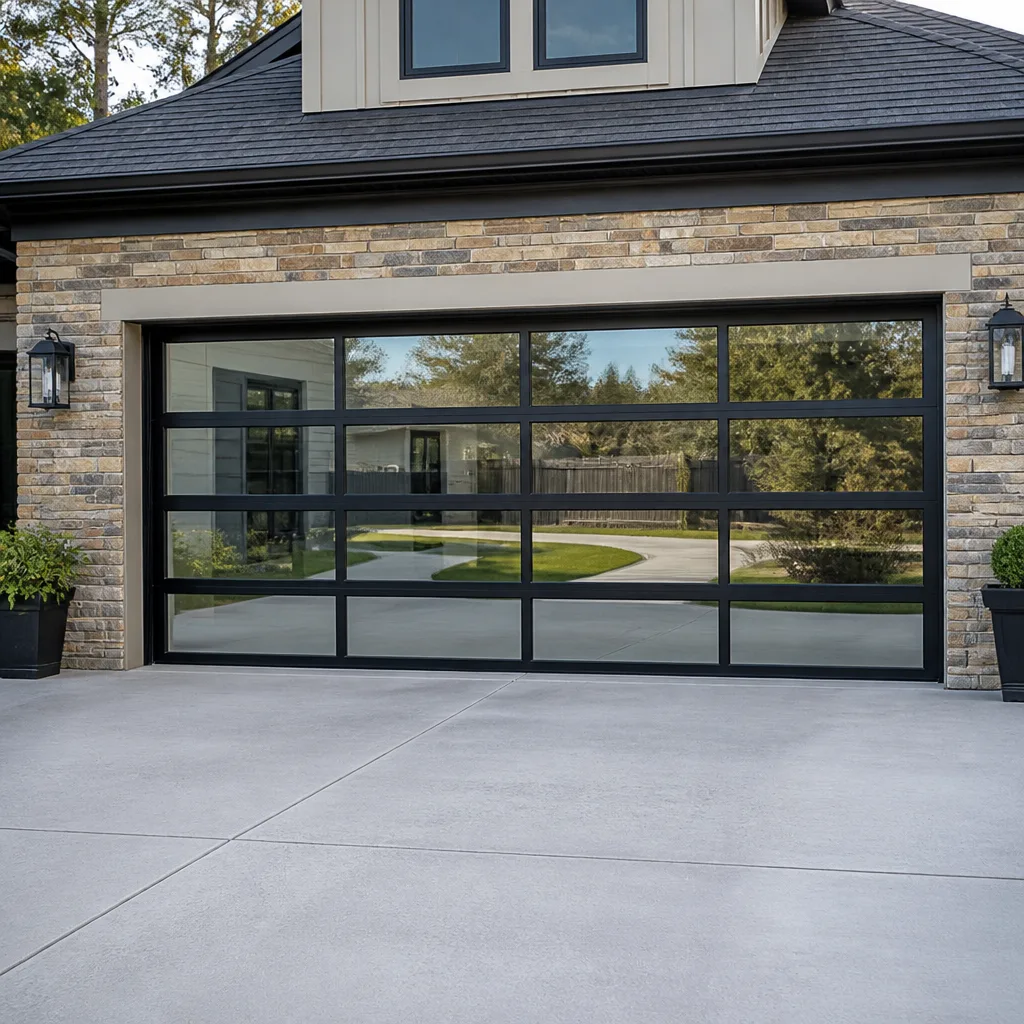 Full-view glass
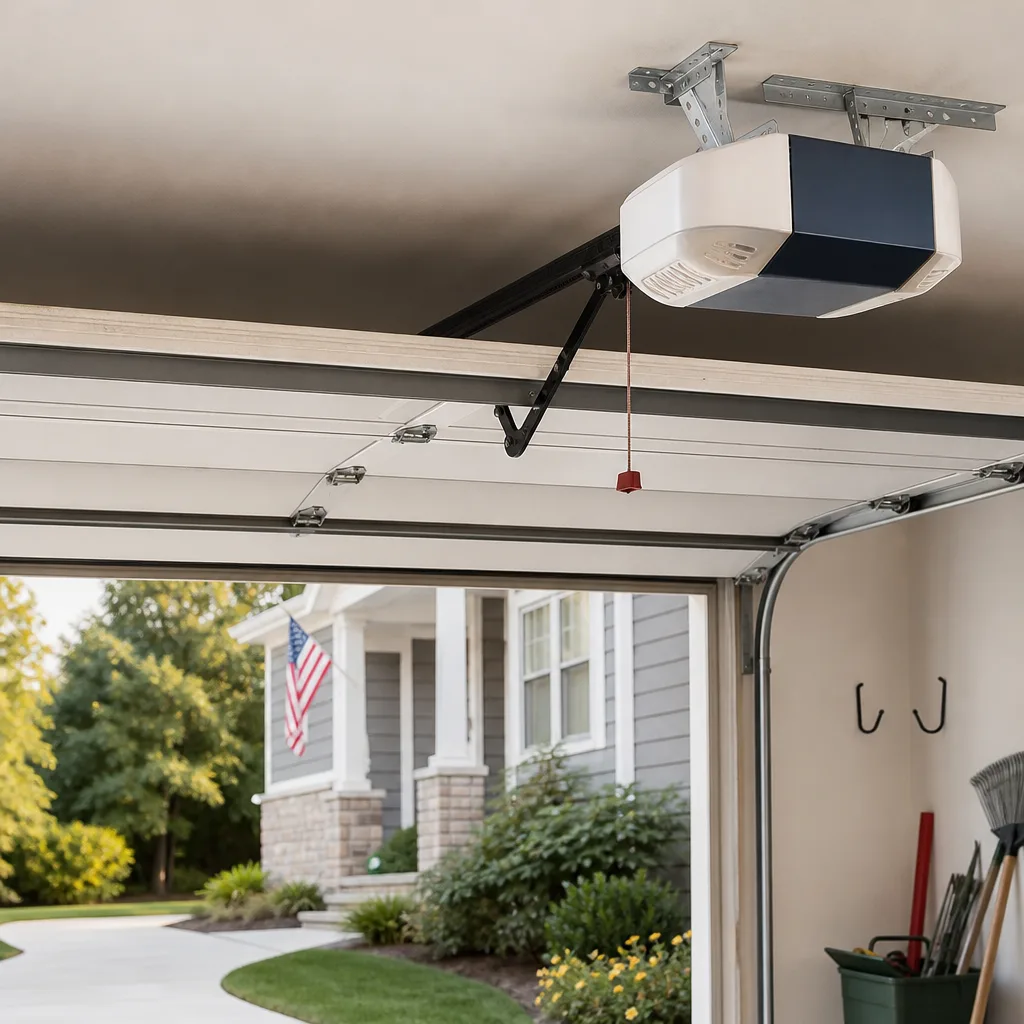 Chamberlain openers
Full 25-point door and opener safety check with every visit - springs, cables, rollers, tracks, and your LiftMaster or Chamberlain opener included
You get a price before we start. It does not change when the truck arrives.
Get your free estimateGarage Door Repair Maintenance Checklist for Dallas Homeowners
A torsion spring that passes a visual inspection in April can be within 200 cycles of failure by September. Dallas heat does something specific to garage door hardware: it bakes the lubricant out of rollers, accelerates metal fatigue in high-tension springs, and warps weatherstripping until it cracks like old leather. Most maintenance checklists floating around online were written for a generic American climate. This one was built for Dallas. You’ll learn the month-by-month schedule calibrated to our actual seasons, the exact lubricants that belong on each component, the five sounds that diagnose specific problems (see our Garage Door Warning Signs: A Dallas Homeowner’s Reference Guide for deeper detail), and the post-hail inspection routine that catches structural damage before it becomes a $1,400 panel replacement.
Quick Answer
A Dallas garage door needs a 15-minute visual and mechanical inspection every month, targeted lubrication twice a year (late spring and early fall), and a full balance test every season. The two tasks that matter most in DFW are pre-summer lubrication with a silicone-based lubricant and post-storm track inspection after any hail event. Skip these and you’re financing repairs that could have been avoided for the cost of a $12 can of lubricant.
Styles & brands we work with
Table of Contents
- Why Dallas Weather Destroys Garage Doors Faster
- The Monthly Visual Checklist (15 Minutes, No Tools)
- The Dallas Seasonal Maintenance Schedule
- Lubrication in Dallas: What to Use, What to Never Touch
- The Door Balance Test: What It Tells You About Spring Tension
- Post-Hail Inspection: Structural vs. Cosmetic Damage
- The Five Sounds That Diagnose Garage Door Problems
- Common Mistakes to Avoid
- When to Call a Professional
- Frequently Asked Questions
Why Dallas Weather Destroys Garage Doors Faster
Dallas sits in a climate band that punishes garage doors harder than almost anywhere else in the country. We get 100-degree summers with direct sun on west-facing door panels for six or seven hours a day. We get spring hailstorms that can drop golf-ball-sized ice at 70 miles per hour. We get winter cold snaps that swing temperatures 40 degrees in a single afternoon. And we get humidity that sits between 60 and 80 percent from May through September.
Each of these conditions attacks a different component. The heat evaporates lubricant from rollers and hinges faster than in cooler climates, which is why a door that ran quietly in March starts grinding by August. The sun’s UV exposure breaks down the neoprene weatherstripping along the bottom and sides, so the seal that kept out dust and rainwater in year one is hard and brittle by year three. The hail doesn’t just dent panels; it can knock tracks out of alignment by a quarter inch, which puts uneven load on the rollers and shortens their life. And the humidity corrodes untreated hardware, especially on older doors that predate the galvanized coatings standard on doors made after roughly 2010.
Here’s what this means in practical terms for a Dallas homeowner. Your maintenance schedule cannot be a once-a-year spring cleaning ritual. It has to be keyed to two specific windows: the six weeks before summer heat sets in, and the 48 to 72 hours after any hailstorm passes through your neighborhood. Everything else fits between those two anchors. We’ve serviced doors in Preston Hollow, Lake Highlands, and Richardson, and the pattern is consistent: doors that get pre-summer lubrication and post-storm inspection last 15 to 20 years. Doors that get neither start eating springs and opener gears by year seven or eight.
The Monthly Visual Checklist (15 Minutes, No Tools)
Once a month, walk through these seven checks. They require no tools beyond your eyes and ears. The point is to catch changes before they become failures. A visual check won’t tell you everything, but it will catch 80 percent of problems at the stage where a $25 part is still the fix.
The 7-Point Monthly Inspection
- Watch the door travel from fully closed to fully open, then back down. The door should move at a smooth, consistent speed with no jerking, hesitation, or speeding up. If the door stutters in one spot, a roller is binding or a track section is slightly misaligned. Note where the stutter happens; it tells you which side to look at.
- Listen while the door moves. Silence is the goal. Any new sound (grinding, squealing, popping) means something has changed. Match the sound to the five-sound diagnostic in the section below.
- Check both vertical tracks for gaps. The roller should ride in the track with no daylight between the roller stem and the track edge. Push gently on the track with your hand. If it flexes more than half an inch, a mounting bracket may have loosened.
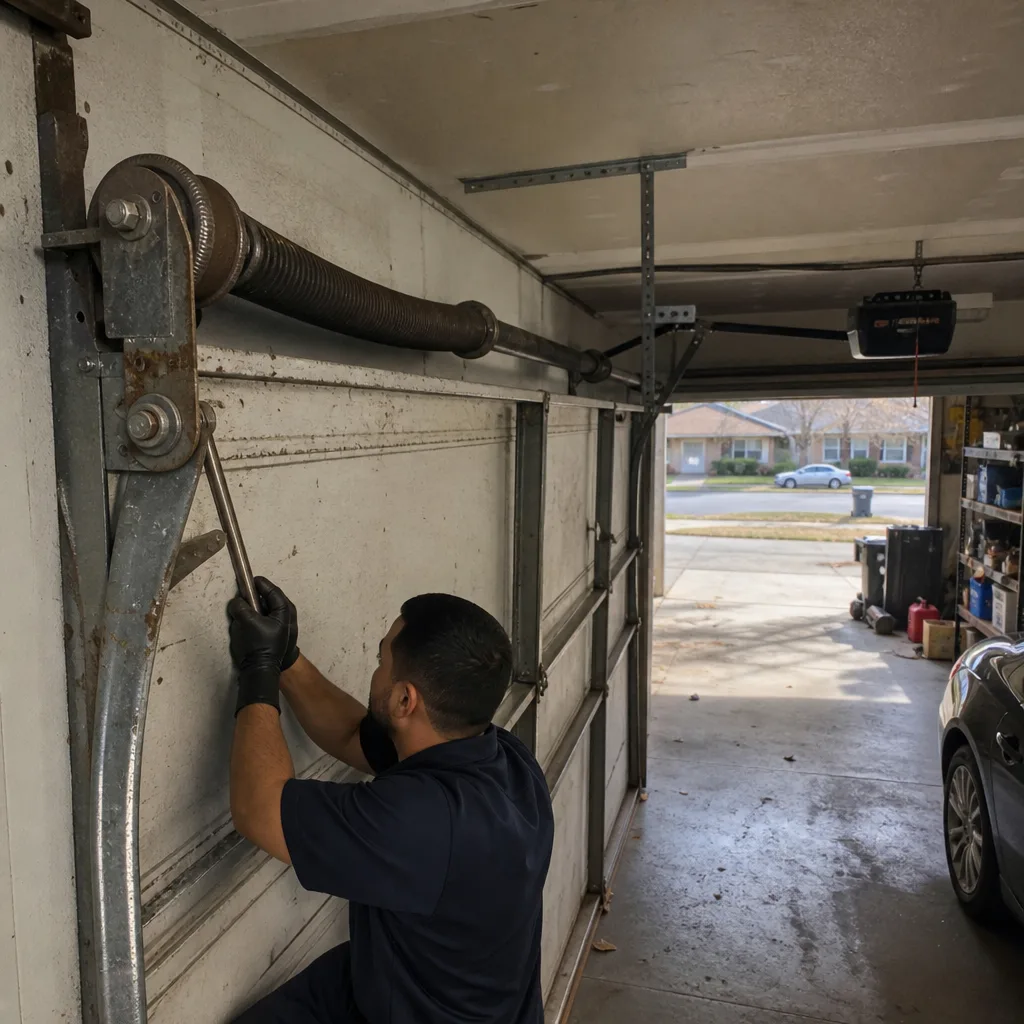
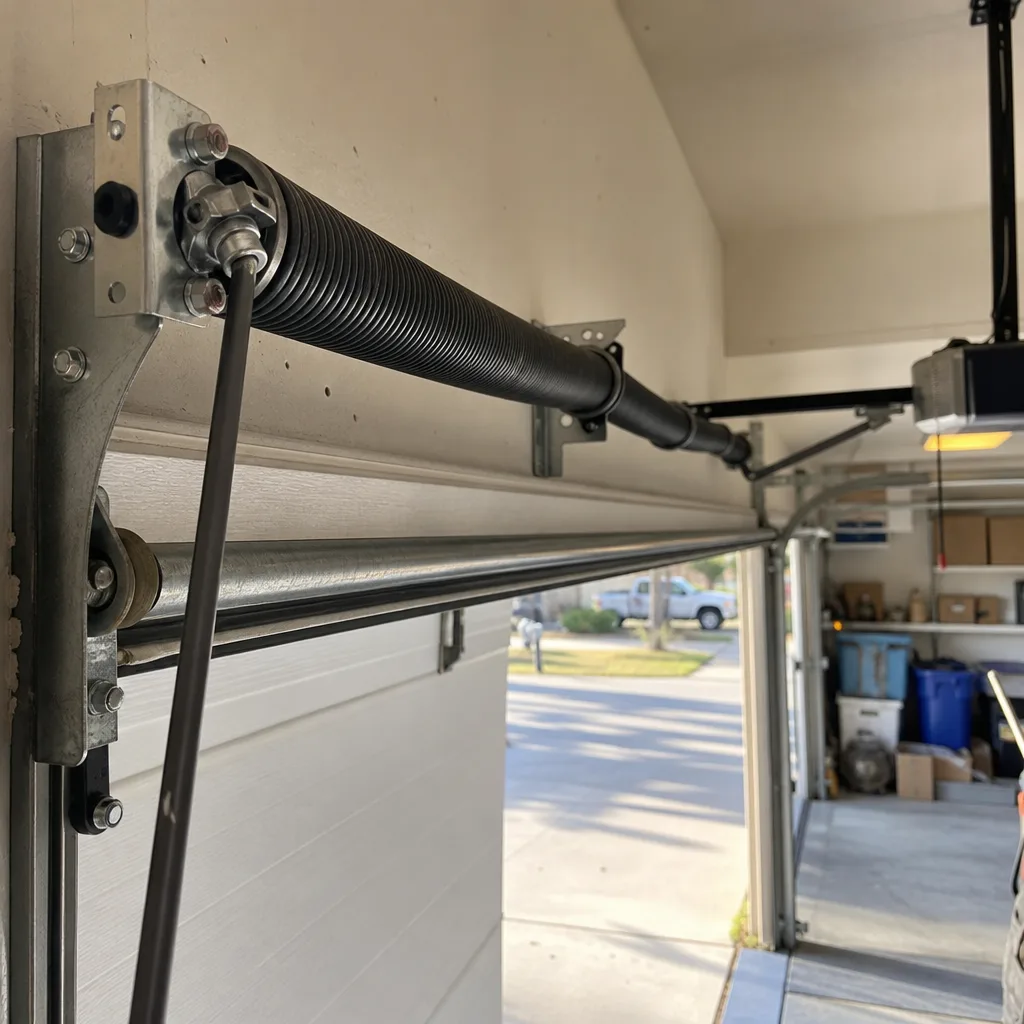
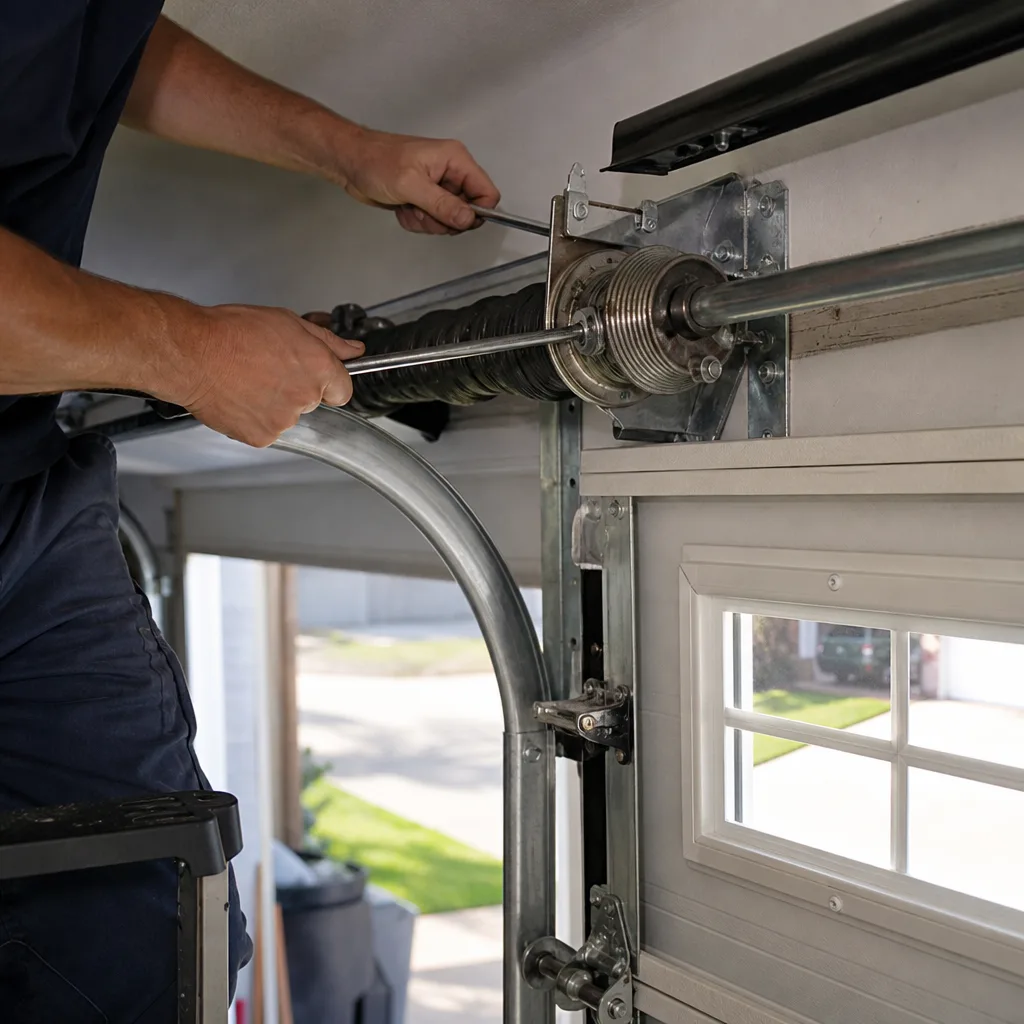
- Inspect the torsion spring above the closed door. Look for rust, gaps in the coils, or a visible break. A healthy spring is a continuous coil from end to end. If you see a two-inch gap mid-spring, it has snapped and the door is unsafe to operate. Do not touch anything; call a professional. Spring replacement averages $150 to $280 in Dallas for the parts and labor on a standard torsion system.
- Check the bottom weatherstripping along the door’s lower edge. Look for cracks, brittleness, or separation from the aluminum retainer. In Dallas, this strip typically hardens in 18 to 24 months because of heat and UV exposure. Replace it when it no longer bends easily by hand.
- Check the side and top weatherstripping. Press on it. It should spring back. If it stays compressed or flakes under finger pressure, it has dried out and will no longer seal against North Texas wind and dust.
- Check the opener’s reversing sensors. Both sensor eyes should have a solid LED light, not blinking. Wipe each lens with a dry cloth. Misaligned or obstructed sensors are the most common cause of a door that stops halfway or refuses to close. This is a five-minute fix most homeowners can do themselves with a screwdriver and a level.
Run this check on the first Saturday of every month. It takes 15 minutes. What you’re training yourself to notice is deviation from baseline: the door that used to be silent but now squeaks, the weatherstrip that was soft but is now stiff, the track that was flush but now shows a gap. Detecting these changes early is the difference between a maintenance adjustment and a garage door repair in Dallas that runs into the hundreds.
The Dallas Seasonal Maintenance Schedule
Here’s the schedule we recommend for DFW homes, calibrated to the months that actually matter in North Texas. This is not a generic quarterly plan. It’s built around two thermal events: the ramp-up to triple-digit summer heat and the drop into the first frost.
Late April to Mid-May: Pre-Summer Heat Prep
This is the most important window of the year in Dallas. By mid-May, daytime highs are pushing into the 90s and the metal is expanding. By July, the ambient heat inside an uninsulated garage can hit 120 degrees, and any lubricant that isn’t silicone-based has broken down. Complete these tasks between April 15 and May 15:
- Lubricate all rollers, hinges, the torsion spring, and both bearing plates (full instructions in the next section).
- Run the door-balance test and note any change from the last time you ran it (section below).
- Wash the exterior panels with mild dish soap and water to remove accumulated pollen, dust, and road film. Dallas spring pollen is aggressive on finishes; left to sit through summer, it accelerates oxidation.
- Check and tighten every hinge and bracket bolt you can reach with a socket wrench. Thermal expansion and contraction through winter and spring loosens them by a quarter turn or more.
- Test the auto-reverse safety feature: place a 2×4 flat on the floor under the door and close it. The door should reverse within two seconds of contact. If it doesn’t, the opener’s force settings need adjustment; this is not optional on a door that kids or pets walk under.
June Through September: Heat Watch
- During any week with three consecutive days above 100 degrees, do a quick spring inspection. Metal fatigues faster at high temperature, and a spring that was intact in May can crack in August. Look for the gap in the coil described above.
- Listen for a change in the opener’s sound. Heat makes the internal gears expand, and a slightly stripped gear gets louder in summer. Catch it early and you replace a $40 gear. Ignore it and you replace a $250 motor.
- Keep the tracks free of grass clippings and dust accumulation. Hot metal plus debris equals increased friction on the rollers.
Late October to Early November: Pre-Winter Check
- Re-lubricate. Yes, again. The lubricant you applied in May is mostly gone by October, cooked out by four months of North Texas heat.
- Check weatherstripping for the opposite problem: cold cracking. Dallas winter nights below freezing will turn brittle weatherstripping into cracked weatherstripping.
- Run the balance test again and compare it to your spring result. If the door feels heavier now, the spring is losing tension and will break. Schedule a replacement before it fails without warning.
- Lubricate the lock mechanism if you have one. Cold weather causes the internal tumblers to stiffen, and a key that turns hard is a lock that will eventually refuse to turn.
After Any Hailstorm
Within 48 hours of hail in your neighborhood, complete the post-hail inspection in the section below. Do not wait for your insurance adjuster. The adjuster will not check your tracks, rollers, or spring balance; they assess panel condition only. You need to know whether the storm damaged the mechanical system, not just the cosmetics.
Lubrication in Dallas: What to Use, What to Never Touch
Most garage door lubrication problems in Dallas come from using the wrong product, not from failing to lubricate at all. The single most destructive product sold on the shelf for a garage door is WD-40. We cannot be clearer about this. WD-40 is a solvent and water-displacing spray, not a lubricant. It is designed to free rusted parts and displace moisture. It strips away the lightweight grease that hinges and rollers need, then evaporates, leaving the metal drier than before. Every spring and summer, we see doors in Dallas that were “lubricated” with WD-40 and are now grinding metal-on-metal.
Here’s what belongs on each component:
Rollers
Use a white lithium grease spray or a silicone-based garage door lubricant. Do NOT use penetrating oil, chain lube, or motor oil. Apply a small amount to the ball bearing inside the roller wheel, not to the wheel surface itself. The wheel is meant to roll along the track; lubricating the outside just attracts dust and creates a paste. If you have nylon rollers (common on doors installed after 2005), they require less lubrication than steel rollers, but the bearing still needs attention.
Hinges
Use the same white lithium or silicone spray. Apply at each pivot point where the hinge halves meet. Move the door slightly to work the lubricant into the joint. Two or three drops at each pivot is enough. More is not better; excess lubricant drips onto the door face and attracts Dallas dust.
Torsion Spring
Use a silicone-based lubricant or white lithium. Spray the entire length of the spring while the door is closed, so the spring is under full tension. The goal is to coat the metal surface to slow corrosion and reduce friction between coils as the spring winds and unwinds. Do not use grease from a tub; it cures into a hard cake in Dallas heat and actually increases coil friction.
Bearing Plates and End Bearings
The bearing plates are the steel brackets at each end of the torsion spring shaft. Spray lubricant directly into the bearing where the shaft passes through. Work the door through a full cycle to distribute it.
Track
Nothing. Do not lubricate the track. A lubricated track collects dust, and in Dallas, that dust is fine clay and pollen. It forms an abrasive slurry that grinds the roller wheels down. If the track feels gritty, wipe it with a dry, clean rag. That’s all. If the door is actually binding, the track is misaligned and lubricant will not fix it.
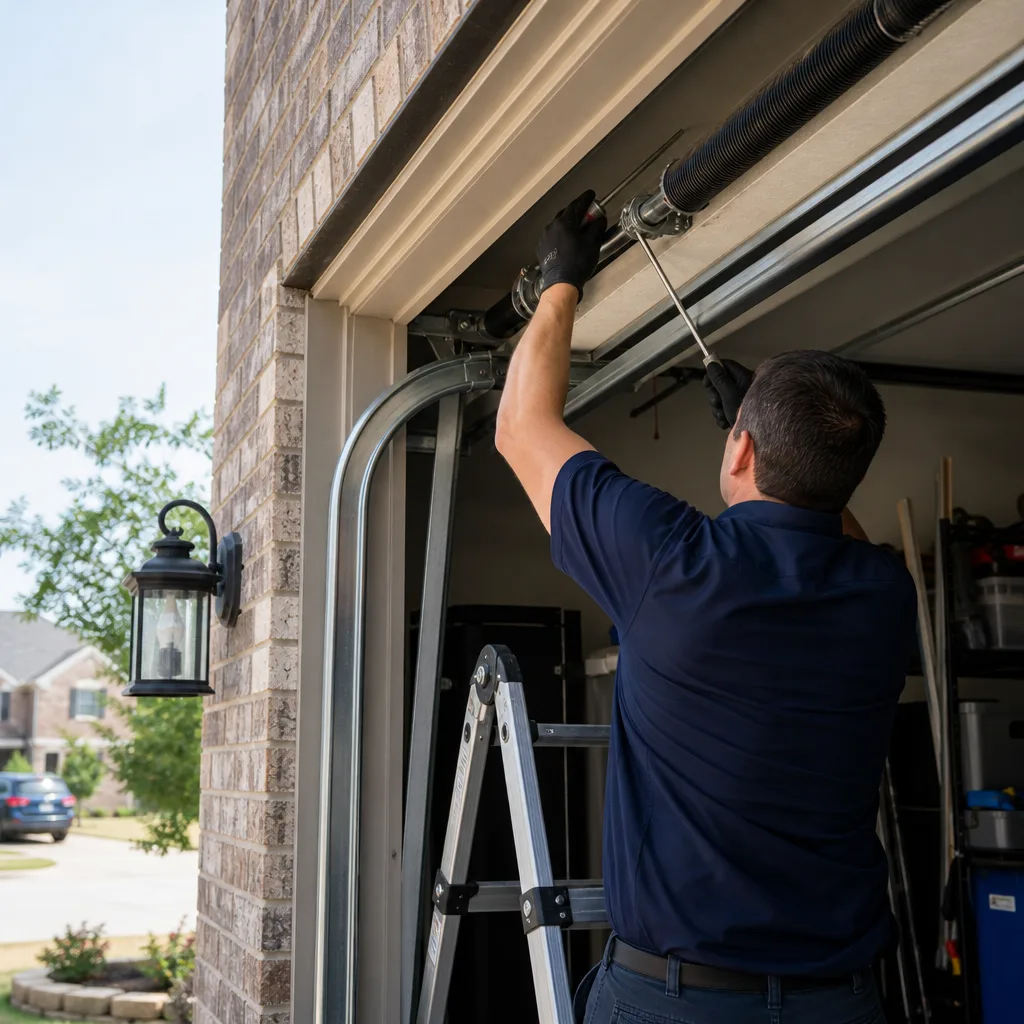
Safety note: Any lubrication task that puts your hands near the torsion spring requires caution. The spring is under hundreds of pounds of torque even when the door is closed. Use the spray extension tube to keep your hands away, and never insert fingers between coils. If you’re not comfortable working near the spring, a garage door spring repair professional in Dallas can do the full lubrication as part of a service call.
The Door Balance Test: What It Tells You About Spring Tension
This is the single most diagnostic thing you can do for your garage door, and almost nobody does it. The balance test tells you whether the torsion spring is doing its job: holding the weight of the door so the opener doesn’t have to. A door with a failing spring gets progressively heavier for the opener, which shortens the opener’s life. A door with a broken spring weighs 150 to 200 pounds and should never be lifted manually.
Safety note: If you suspect the spring is broken, do not attempt this test. A broken spring means the door’s full weight is unassisted, and a door that heavy can drop hard. Call a professional instead.
Here’s the procedure:
- Close the door fully and disconnect the opener by pulling the red emergency release cord. The door is now in manual mode.
- Lift the door by the handle or bottom rail until it is about waist height.
- Release the door completely.
What the result tells you:
- The door stays at waist height or moves an inch or two either way: The spring tension is correct. The spring is holding the near-full weight of the door, which is exactly its job. Reconnect the opener.
- The door slowly slides down: The spring is losing tension. It can no longer hold the full weight, and the opener is working harder than it should to hold the door open. Schedule spring replacement now, while it’s still functioning, rather than waiting for the inevitable break. Most torsion-spring replacements in Dallas run $150 to $280, parts and labor included, and this is one of the few home repairs where doing it before it breaks is meaningfully cheaper than after.
- The door rises on its own: The spring has too much tension. This is less common but possible if a previous adjustment was done incorrectly. An over-tensioned spring can become a projectile risk if it fails.
- The door drops fast or won’t lift: The spring has broken. Lower the door gently if you can. Call for professional repair immediately. Do not attempt to lift it. Do not attempt to reconnect the opener and operate the door.
Run the balance test every three months. Put it on your phone’s calendar for the first day of each season. You’re looking for change over time. If the door held perfectly in March but drifts down six inches in June, the spring has fatigued during that period and is telling you clearly that replacement is imminent.
Post-Hail Inspection: Structural vs. Cosmetic Damage
North Texas hail season runs from March through June, with a secondary window in early fall. When hail hits your neighborhood, it almost never affects only your home. The post-storm period is when Dallas roofing and siding companies are all over the place, and garage door companies should be on your call list too. Here’s why: hail damage to a garage door can be structural even when it looks minor, and the insurance claims process is much smoother when you have a professional inspection done before the adjuster arrives.
What to check after a hailstorm:
- Panel dents: Dents from hail are cosmetic unless they have creased the panel’s internal reinforcement. Run your hand over the dent. If the panel surface is dimpled but flat, it’s cosmetic and may not need replacement. If the dent has a sharp crease that changes the panel’s cross-section, the structural stiffness is compromised, and that panel will flex and fatigue over time. Creased panels should be evaluated for replacement.
- Track alignment: Hail doesn’t directly bend tracks, but hailstorms often arrive with straight-line winds that push the door against the track. Check both vertical tracks for any bow or kink. Run the door through a full cycle and watch whether the roller pauses or chatters at any point. A door that worked perfectly before the storm and is now noisy or hesitant has suffered a track misalignment.
- Weatherstripping tears: Hail can tear rubber weatherstripping, especially the bottom seal if the door sits close to the ground. Replace torn weatherstripping before the next rain. A torn bottom seal lets water, dust, and insects into the garage.
- Roller damage: Check each roller for chips or flat spots. Hail can also cause the door to shift, and a shifted door can chew up roller wheels. Any roller that no longer rolls smoothly should be replaced; they’re sold individually or in full sets, and replacing all of them at once (typically done when upgrading to nylon) avoids the mismatched-wear problem.
- Opener operation: Cycle the opener three or four times after the storm. The door should stop cleanly at the fully open and fully closed positions. If it stops short or reverses unexpectedly, the storm may have moved the travel limit settings or knocked a sensor out of alignment.
Cosmetic vs. structural: the practical line. Dimpled panels are genuinely cosmetic. In many Dallas homes, hailstorms leave four or five dime-sized dimples per panel. These do not affect the door’s strength or operation. You can file a claim, and many insurers will pay for panel replacement. You can also choose to live with them; the door will function identically. The condition that actually requires action is creasing. A creased panel flexes when the door moves, and that flexing concentrates stress at the edges of the crease. Over months, the metal fatigues, the crease worsens, and eventually the panel will split. That’s the point where a $180 cosmetic replacement becomes a $400 structural repair.
One note for Dallas homes specifically: west-facing doors take more hail damage than east-facing doors because North Texas hailstorms most commonly move from west to east. The hail hits the western elevation first and hardest. If your garage door faces west, do a post-storm check even when the visible damage seems light.
We recommend having the mechanical inspection done by a professional before your insurance adjuster arrives. The adjuster’s job is to assess covered damage, not to catch a loosened track bracket. A thorough garage door installation specialist in Dallas who does repair work can tell you what’s structural, what’s cosmetic, and what the fair repair cost looks like. You’ll be a more informed homeowner when the adjuster’s check arrives.
The Five Sounds That Diagnose Garage Door Problems
Your garage door talks. Most homeowners learn to ignore the sounds because they develop gradually. That’s a mistake. Each of these five specific sounds maps to a specific problem, and if you can identify the sound in the first week, you’re looking at a small repair instead of a big one.
1. Grinding (metal-on-metal scraping, usually steady)
A rhythmic grind as the door moves almost always means dry rollers. The ball bearings inside the wheels have lost their lubrication, and the hardened steel balls are running dry against their races. Every month in Dallas that this continues, the bearings wear further, until a roller seizes completely. A seized roller typically derails, and that’s how a simple $15 roller replacement becomes a $200 track-and-cable repair. Lubricate now, and replace any roller that stays noisy after lubrication.
2. Popping (sharp, irregular, often comes from the spring area)
A popping sound from the torsion spring area occurs when individual coils bind and then release. This typically means the spring has lost some tension and the coils are settling, or the spring’s surface has begun to corrode. A popping spring will eventually crack; this is a warning sound. Schedule a spring inspection. If the popping is frequent or loud enough to hear from inside the house, the spring is in the final stage of its life.
3. Slapping (loose, rattling sound, especially during the lower half of travel)
Slapping is the sound of a loose cable. The lifting cables on each side of the door carry load when the spring turns, and when the spring loses a little tension, the cables lose their tautness and slap against the track or the door frame. This is another pre-breakage warning. The cable itself is probably fine; the spring is weakening. Tightening the cable does not fix the root cause. The spring needs adjustment or replacement.
4. Squealing (high-pitched, often comes from the opener motor)
A squeal from the opener during door travel is typically the opener’s drive gear. On chain-drive openers (very common in Dallas homes because they tolerate our temperature swings better than belt drives in some installations), the internal gear wears over time. A squeal under load means the gear teeth are stripping. Replacing the gear is a $40 to $80 repair. Replacing the whole opener because the stripped gear burned out the motor is $250 to $450. One of these is a Saturday afternoon. The other is a full service call.
5. The Rhythmic Clunk (a regular thumping you can feel in the floor while the door moves)
This is the sound most people ignore longest because it’s low and rhythmic. A rhythmic clunk means a roller has worn a flat spot or a hinged section is loose. The door is slightly catching, then releasing, at a specific point in its travel. Over time, the catch-and-release hammering loosens the hinge bolts, then the track brackets, then the operator mount. What started as a $12 roller replacement becomes a comprehensive door adjustment in six months. The rule: a clunk that repeats at the same point in the door’s travel is a rotating component; a clunk that repeats randomly is a track alignment problem.
If you hear any of these five sounds in your Dallas garage, don’t wait. We’ve written this guide so you can identify the problem and decide whether it’s a DIY fix or a call to a professional. And if you’re not sure, that’s what we’re here for. Bramwell Garage Doors Dallas offers a free estimate on any Garage Door Repair services in Dallas and surrounding areas, and the number is (361) 240-9428.
Common Mistakes to Avoid
- Using WD-40 as a garage door lubricant. This is the worst single thing you can do. WD-40 displaces the grease that was there and leaves nothing behind. In Dallas heat, the metal dries out within a week and begins grinding. Use white lithium or a dedicated garage door lubricant.
- Lubricating the track. Greased tracks collect North Texas dust, clay, and pollen into an abrasive paste. Tracks should be dry. If a track is binding, it’s misaligned, not under-lubricated.
- Waiting until a spring breaks before replacing it. Replacing a functioning spring that is showing fatigue is a 45-minute job. Replacing a broken spring is the same job with a forced door-opening problem attached. In North Dallas and Far North Dallas particularly, we see doors that sit for a day or two when a spring breaks. That’s avoidable.
- Ignoring a weatherstripping replacement because it’s cosmetic. The bottom seal is not decorative. It keeps out rain, dust, and Dallas’s infamous summer insects, and it stabilizes the door’s temperature inside the garage. Replacing a cracked bottom seal costs $20 to $40 and takes 20 minutes.
- Adjusting spring tension without the proper winding bars. The torsion spring is under enough torque to seriously injure someone. Never insert a screwdriver or any improvised tool into the winding cone. This is the single most dangerous DIY task in residential home repair.
- Filing a hail claim before getting a mechanical inspection. The insurance adjuster covers panel damage. Track, roller, and spring damage from the storm may not be visible to the adjuster, and once your claim is closed, reopening it is an uphill fight. Get the full door checked by a repair professional before you finalize any claim.
- Never running the balance test. Most homeowners don’t know the test exists, and that’s precisely why so many opener failures in Dallas happen at the worst possible time. The balance test is free, takes two minutes, and predicts with near-certainty when a spring is on its way out.
When to Call a Professional
Some garage door issues are genuinely dangerous to handle yourself, and the line is not always obvious. Call a professional for any of these: a broken or visibly cracked torsion spring (under any circumstances); a door that is off its tracks; a cable that has snapped or frayed and is hanging loose; an opener that is smoking, sparking, or emitting a burning odor; a door that falls fast when released in manual mode; or a panel that has creased and now flexes during operation.
These are not jobs where you watch a ten-minute video and figure it out. The torsion spring on a standard Dallas two-car garage door is wound under enough torque to throw a tool, break a bone, or worse if mishandled. We recommend professional inspection before tinkering with anything spring-related. For help choosing the right company, see our How to Hire a Garage Door Contractor in Dallas: A Step-by-Step Guide. Bramwell Garage Doors Dallas offers free estimates in Dallas, and every job starts with a written price before any work begins. Call (361) 240-9428 to schedule.
Frequently Asked Questions
Twice a year in Dallas: once in late April or early May before summer heat sets in, and again in late October before the first winter cold snaps. Each lubrication covers the rollers, hinges, torsion spring, and both bearing plates. If you hear grinding between those windows, lubricate sooner.
White lithium grease spray or a silicone-based garage door lubricant are the correct choices. They hold up in Dallas’s summer heat, which is critical because generic lubricants break down into a thin, useless film above 100 degrees. Never use WD-40; it strips lubricant and accelerates wear.
A professional garage door tune-up in Dallas typically runs between $75 and $150, and should include lubrication, tightening of all hardware, a balance test, and a safety-reverse test. Some companies roll the tune-up fee into the cost of any repair performed during the same visit. Ask before you book whether the tune-up price is credited toward repairs.
No. Torsion springs are under enormous torque and require specialized winding bars and training to replace safely. Extension springs, found on older doors, are also dangerous but for different reasons: if an extension spring breaks, it can launch across the garage. A professional spring replacement in Dallas usually costs $150 to $280, which is a small price to pay compared with the risks of a DIY attempt gone wrong.
Do a visual inspection of the panels, tracks, and weatherstripping within 48 hours. Look for creased dents (structural) versus dimpled dents (cosmetic). Check whether the door still operates smoothly through a full cycle. Then call a professional for a mechanical inspection before you finalize any insurance claim, because track or spring damage from the storm won’t be visible to a panel-only assessment.
A properly maintained garage door in the Dallas area will last 15 to 20 years, and the opener will typically outlast the door if it’s not abused by a failing spring. The two variables that shorten that lifespan most in our climate are skipped summer lubrication and unrepaired hail damage. Address both and you’ll get the full service life out of your equipment. For more guides & resources, visit our blog.
The Bottom Line
Your garage door is the largest moving object in your home, and in Dallas, it operates in heat, humidity, and hail that most of the country never sees. The maintenance that works in Chicago or Seattle is not enough here. What works here is a monthly 15-minute visual check, twice-a-year lubrication with the right product, a quarterly balance test, and immediate attention after every hailstorm. These habits will not eliminate every possible failure, but they will eliminate the expensive, avoidable ones. Run the checklist, listen to the sounds, and when something’s out of your comfort zone, pick up the phone. The Bramwell Garage Doors Dallas home team has been servicing Dallas-area doors under the Kingswell standard since 2001, and every job starts with a written price. Call (361) 240-9428 to schedule a free estimate.
Written by Marcus Ellery, Owner at Bramwell Garage Doors Dallas, serving Dallas since 2001.
See the difference
 Before
 After
After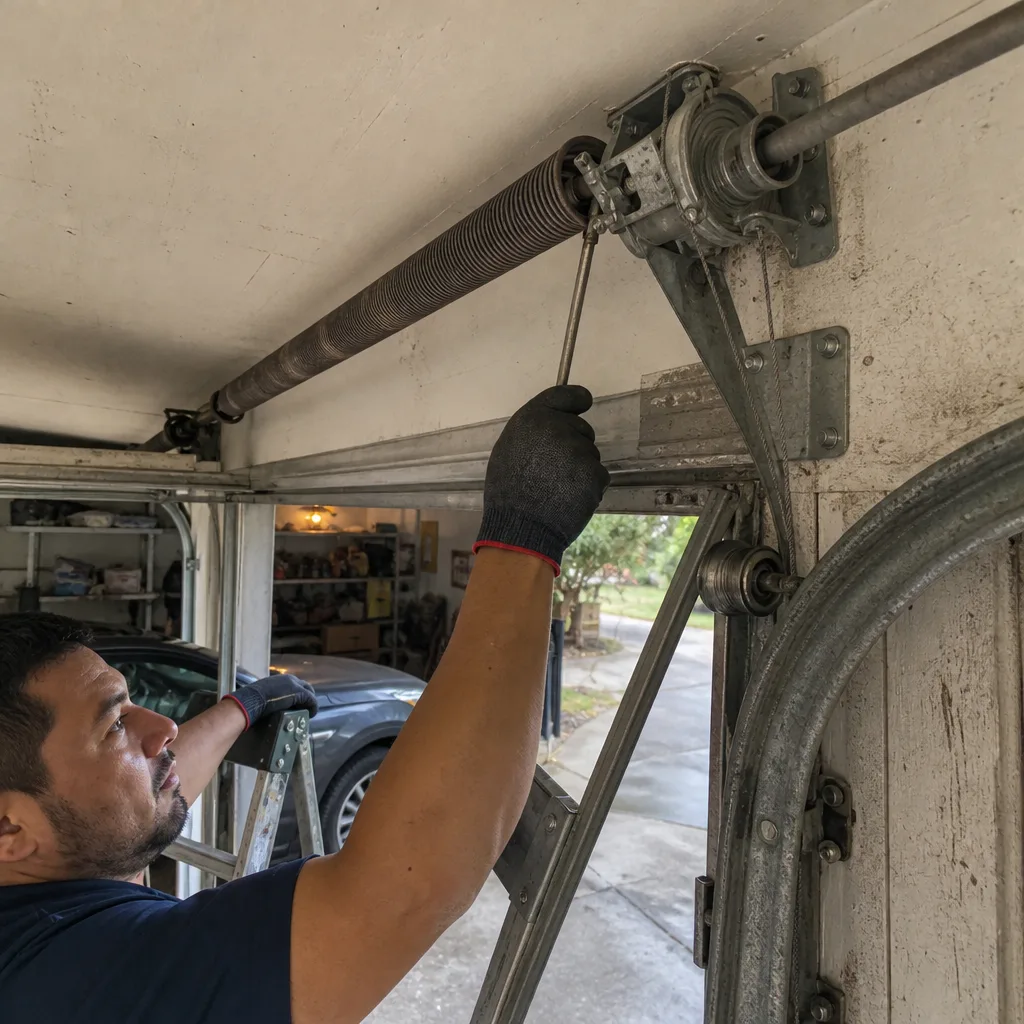 Before
 After
After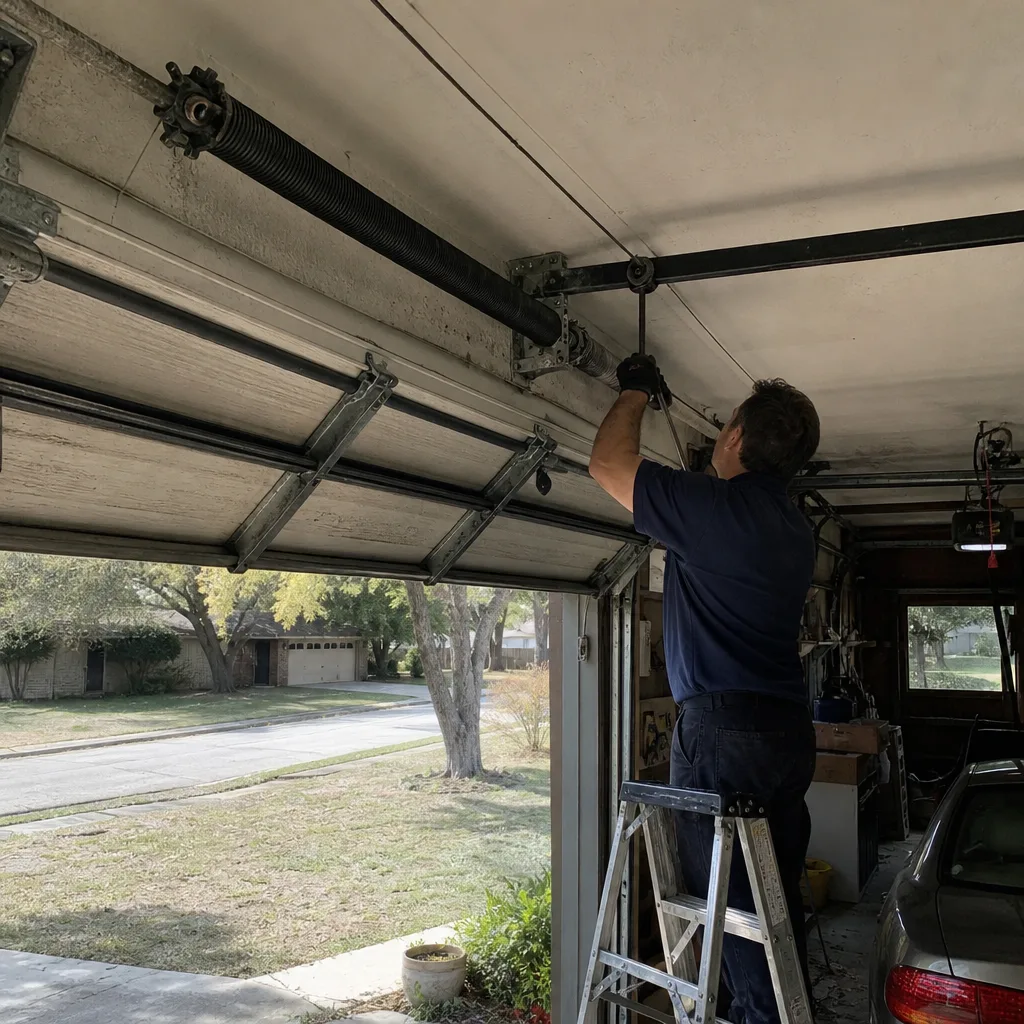 Before
 After
After